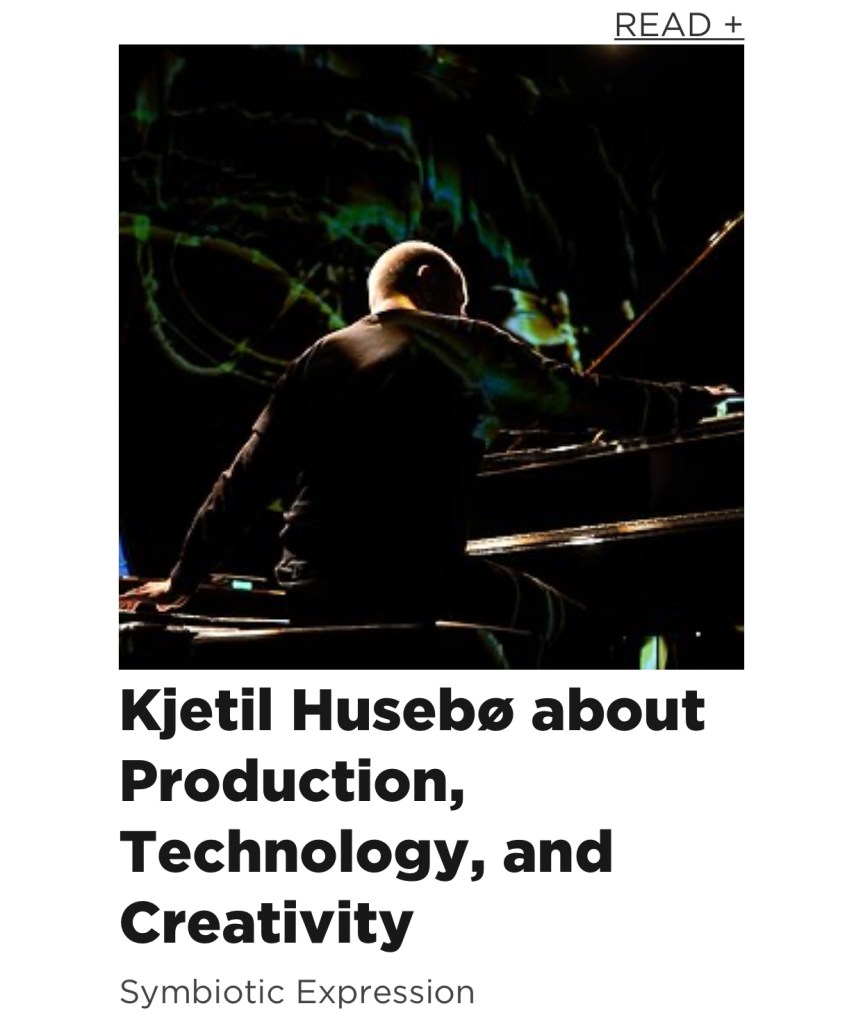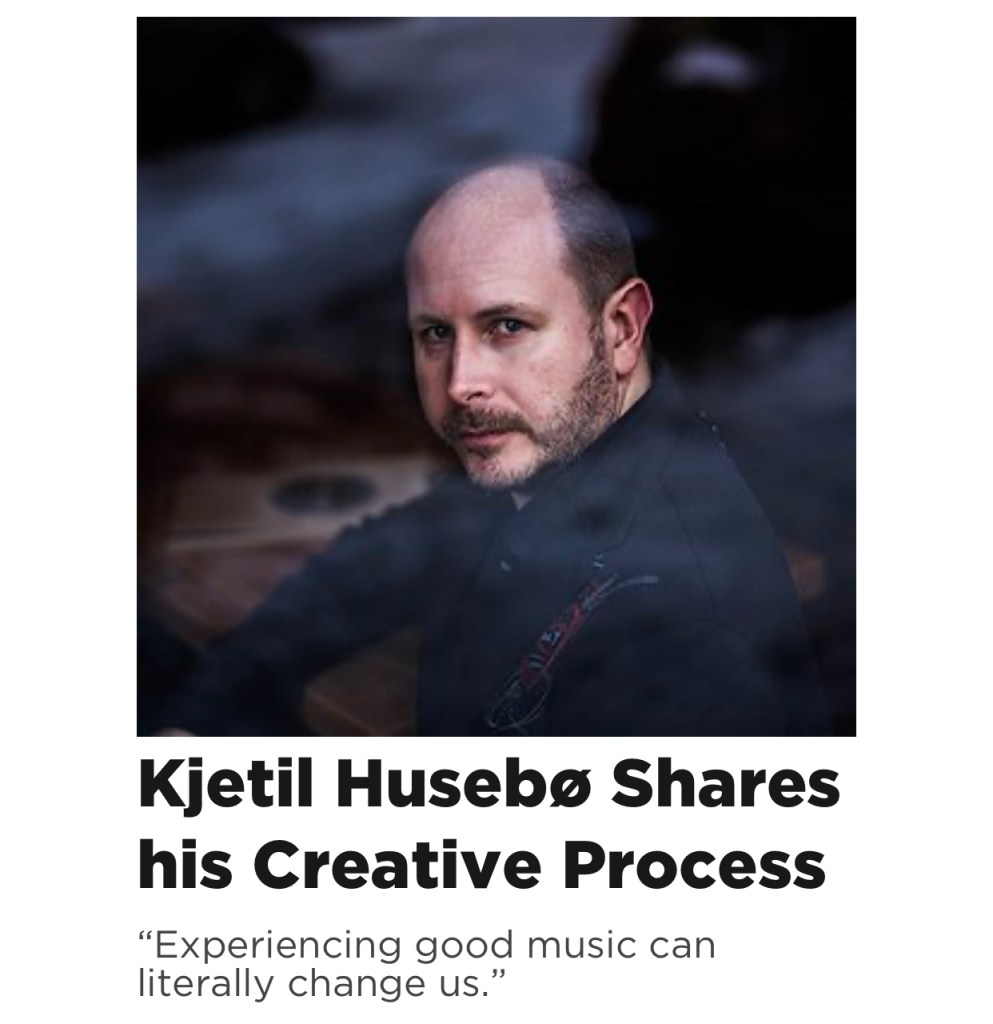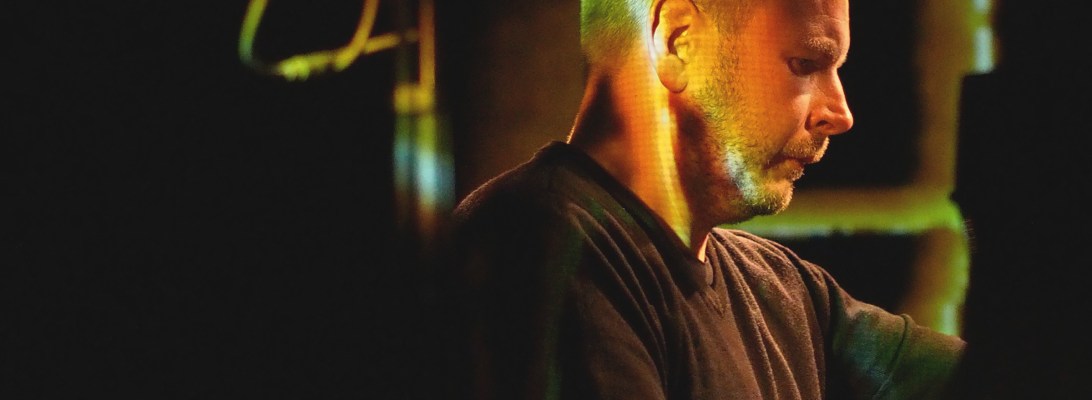

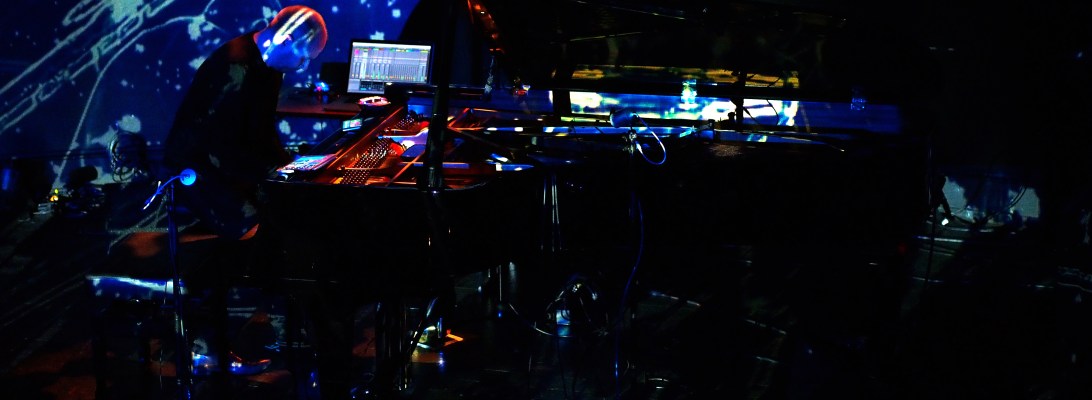
Today, April 22nd 2026, marks ten years since I premiered my solo project, Piano Transformed. The concert took place at Victoria, Nasjonal Jazzscene, during the Tape to Zero festival April 22nd 2016. I was very pleased with the performance, and it was later released on CD and as a digital album in autumn 2020.
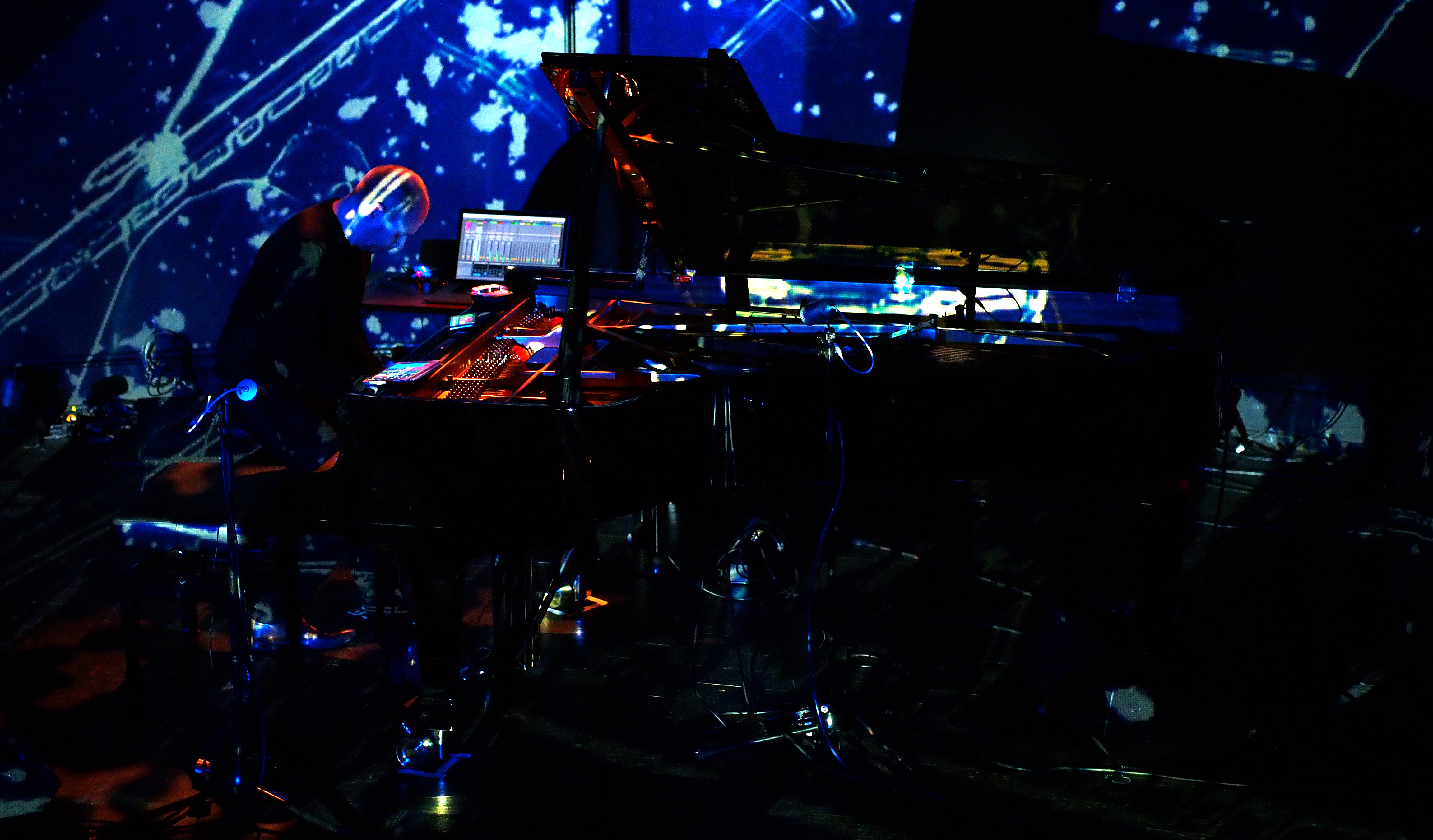
From premiere to ongoing development (2016–2026)
10 years of Piano Transformed (and I am currently working on further developing the project and the setup). Working on establishing and developing this project is something I find both rewarding and deeply inspiring. A detailed description of the technical setup and system can be found below.
With support from Arts Council Norway / the Norwegian Cultural Directorate (Kulturrådet / Kulturdirektoratet) and the Composers’ Remuneration Fund (Komponistenes vederlagsfond), I am currently developing the project and the setup further, both technically and artistically.
A new album will also be recorded later in 2026 and released in 2027.
As of 2026, the project sounds better than ever, and the setup has been expanded, becoming more flexible and opening up new sonic approaches and possibilities.
Introduction
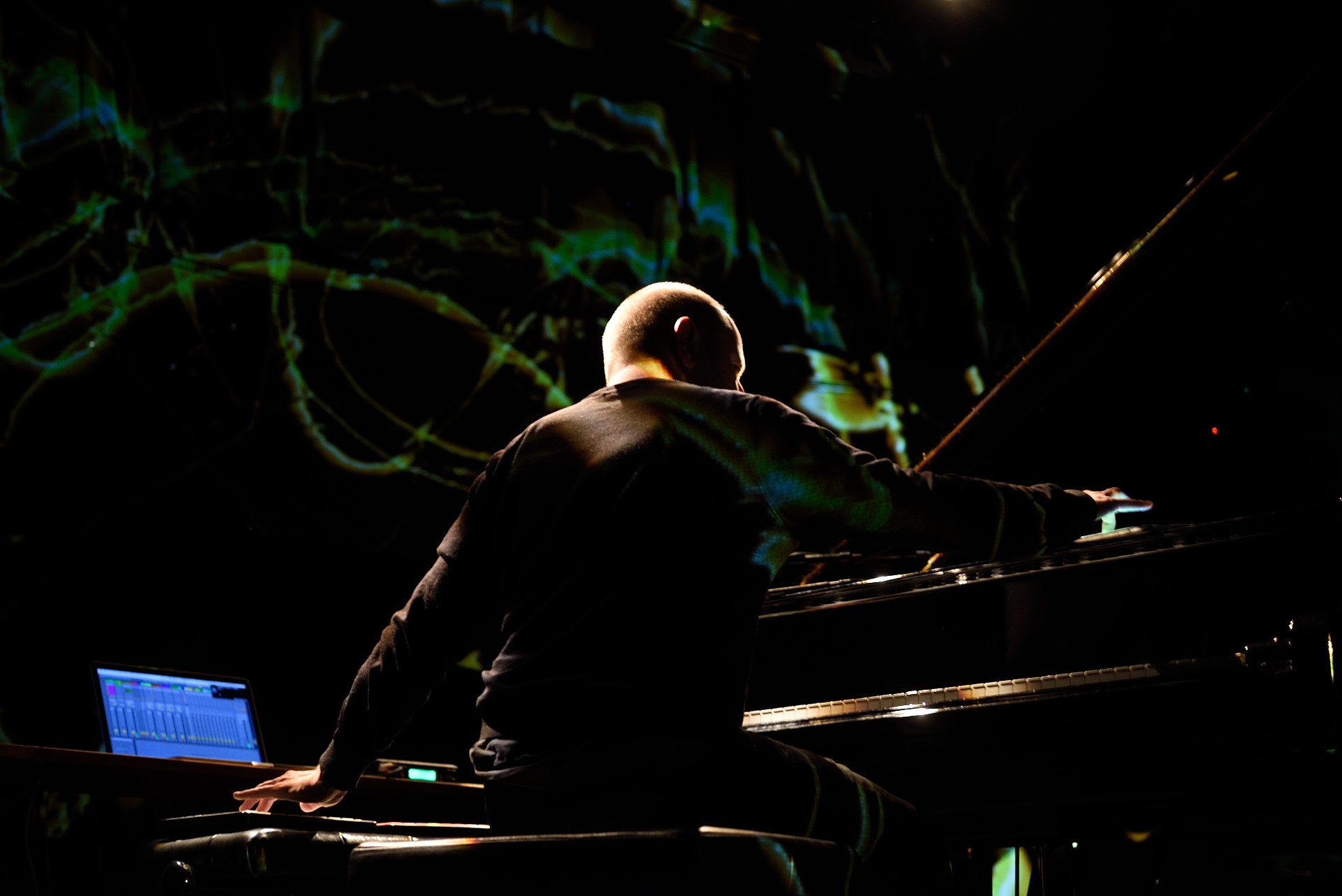
Piano Transformed is a solo project where I combine the playing and the sound of the grand piano with live sampling and live electronics. The system not only uses the piano as a sound source, but also as a real-time controller. This allows live sampling to occur simultaneously with my playing, or for sound fragments to be captured, processed, and transformed in real time before being reintroduced into the music.
A central concept and goal in this project and setup is to orchestrate in real time using the piano together with live sampling and electronics. I am less interested in traditional looping, where layers are built and then played over, and more focused on shaping and orchestrating multiple elements simultaneously.
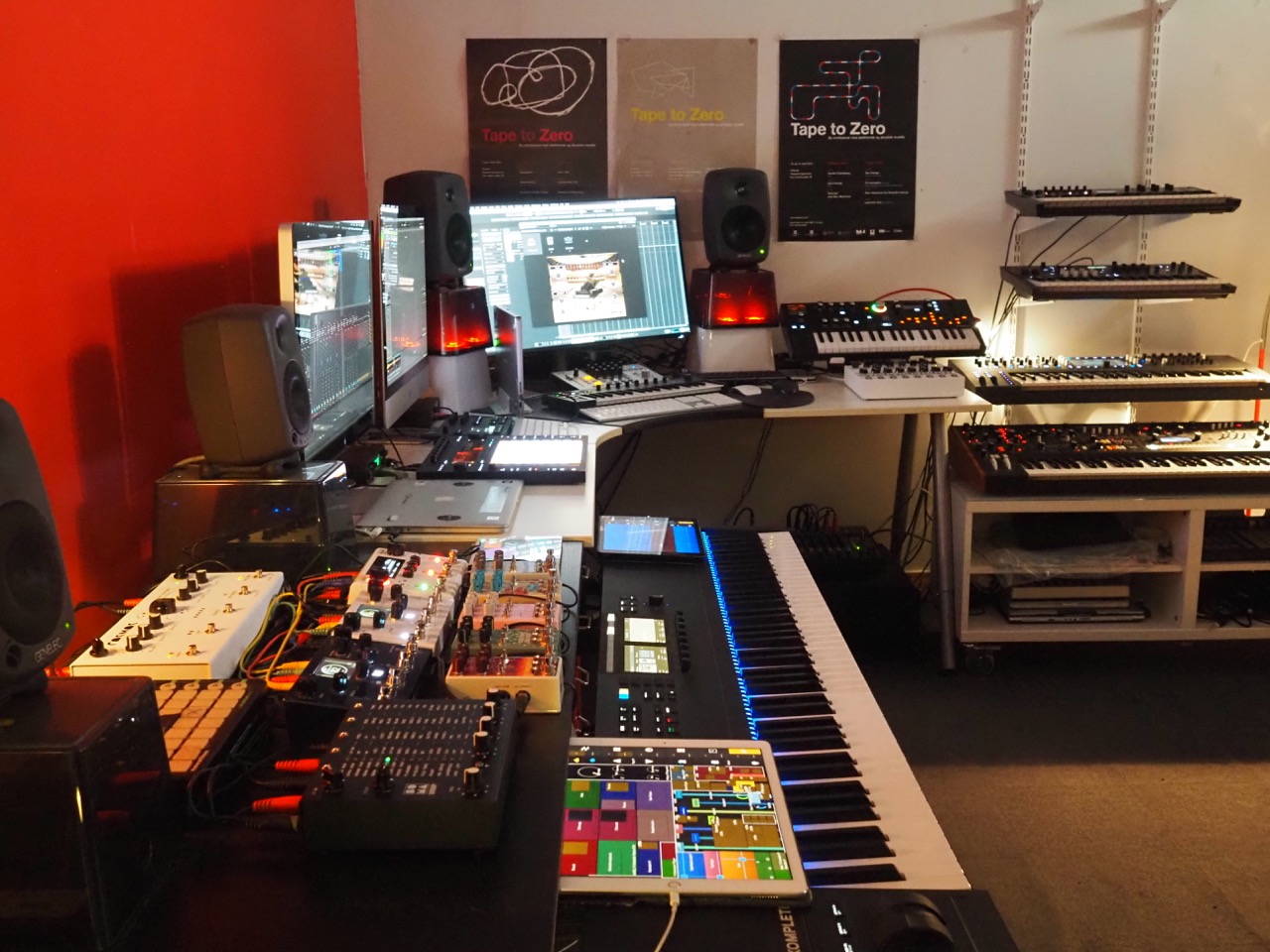
This means that while I play the piano, I also control the sampling and electronic processes in real time—through the piano itself, three iPads, various controllers, and three foot controllers (expression pedals). The different elements are continuously introduced, transformed, and balanced within the same moment.
This approach requires a high level of real time coordination. It involves not only playing, but also listening and making decisions across different time perspectives—responding to what is happening in the present while anticipating what is about to unfold.
Piano Transformed is one of my main projects. It took clearer shape in 2016, but has its roots in several years of experimentation with grand piano in combination with live sampling, effects, and real-time electronics.
During this period in 2016, I developed an extensive setup in Ableton Live, where the piano functions not only as a sound source, but also as an active control interface within a larger electronic system. Through live sampling, sound is captured at the moment it is played and immediately played back alongside the acoustic piano.
This creates a continuous interaction with myself—a musical space where material encounters resistance, is extended, and transformed into new rhythmic, textural, and sonic structures. The expression ranges from percussive and transient to granular, sustained, and drone-based. The range is wide, both in how it sounds and in how it can evolve.
I have a long background as a musician within jazz, classical, and electronic music, and I have been playing acoustic piano since 1990. Even before that, I started playing synthesizers around 1985, and I have had a strong interest in electronic instruments ever since. After many years of focusing on the acoustic piano, I felt the need to expand my musical language, and around 2006 I began exploring live sampling and electronics—first in collaboration with other musicians, and later in increasingly close integration with the acoustic piano.
On the solo albums Contradictions (2012) and Sources (2013), this development is already clearly present on several tracks, with extensive use of live sampling and electronics interacting with the grand piano. However, it was not until 2016 that the concept and system of Piano Transformed were fully defined. That same year, I recorded the first album in the series and performed the first concert with the project. More about this later.
Music, Process, Improvisation and Composition
My work within Piano Transformed exists in the intersection between composition and improvisation. Rather than separating these two approaches, I treat them as part of the same continuous process. The material often emerges through improvisation, but is shaped, refined, and structured over time into more defined musical forms.
The system itself plays an active role in this process. Because sound is captured, transformed, and reintroduced in real time, the music develops as a dialogue between intention and response. I am not only shaping the material, but also reacting to it as it evolves through the system. This creates a dynamic feedback loop where composition happens both before and during performance.
A central aspect of the music is the idea of transformation. Sounds are rarely static; they are extended, layered, fragmented, and recontextualized. A single piano gesture can generate multiple parallel sonic events—granular textures, sustained drones, rhythmic fragments—which unfold over time and interact with new material.
I often think in terms of texture and structure. The music can begin from very detailed, almost microscopic sound processes, and gradually expand into larger formal shapes. At the same time, more defined musical ideas—harmonic, rhythmic, or melodic—can dissolve into textures and more abstract states. This constant movement between detail and form is central to how I compose.
Space, time, and listening are also key elements. The music often unfolds slowly, allowing room for subtle changes and internal movement within the sound. Silence, density, and contrast are used as structural elements, not just as expressive ones.
In this context, the piano is no longer only an instrument in the traditional sense, but part of a larger system for shaping sound. The combination of acoustic playing, live sampling, and processing creates a hybrid instrument where composition, performance, and sound design are deeply interconnected.
The music in the Piano Transformed project is characterized by a wide range and strong contrasts, moving between extremes in both sound and form. It can shift from light, sparse, and playful expressions—sometimes even with a sense of humor—to grand, immersive, and spatial sound worlds. At one moment, the music may be reduced to fragile, almost naked piano gestures; at another, it expands into dense, layered textures, long sustained tones, and evolving drones.
These contrasts are not abrupt interruptions, but part of a continuous flow where opposing elements coexist and gradually transform into one another. The music unfolds across a wide spectrum of sonic states and expressions, where long tones, pitch-shifted layers, and drones interact with percussive attacks, short fragments, and transient gestures.
The interplay between acoustic and processed sound is central. Sounds are stretched, reversed, granulated, and distorted, moving between clarity and abstraction. Sub frequencies, overtones, resonance, and spectral qualities play an important role in shaping the overall sound. The piano can be heard in its pure acoustic form, or as a prepared and transformed instrument integrated into a larger electronic context.
This creates a dynamic space where intimacy and scale coexist—where detailed, percussive gestures can interact with expansive, atmospheric layers. Materials can be dense and immersive, or reduced to minimal, almost fragile states.
Stylistically, the music draws from and moves between contemporary music, jazz, pop, folk influences, classical traditions, ambient, and electronica. Rather than belonging to a single genre, it exists in the space between them, where different musical languages intersect, overlap, and dissolve into one another.
For me, these contrasts are essential—they open up a broader expressive field where the music can breathe, shift direction, and continuously transform over time.
Video: concert at Kampenjazz, Oslo, 2019.
Three Albums
So far, the project has resulted in three album releases. Two studio albums and one live album:
- Piano Transformed (2017)
- Live at Nasjonal Jazzscene (2020)
- Piano Transformed – Interspace (2025)
They are all available on CD and digitally on all plattforms, including Bandcamp.
Piano Transformed (2017)
The first album, Piano Transformed, was recorded over two days at Propeller Studio/Music Division in Oslo in 2016. It was mixed by Reidar Skår and released in 2017.

Credits
Kjetil Husebø — C. Bechstein grand piano, live sampling, live electronics
Recorded at Propeller Music Division, Oslo, Norway
Engineers: Mike Hartung / Jacob Dobewall
Mixed by Reidar Skår at 7. Etg, Oslo, Norway
Mastered by Helge Sten at Audio Virus Lab, Oslo, Norway
Cover design: Lucas Dietrich, Berlin, Germany
Photos (CD digipack): Colin Ventura / Rein Borgen
Music Video
Official Piano Transformed music video made by Adrian Axel & Henrik Nordahl.
Location: Skaland, Senja, Norway. Filmed, edited and produced by Adrian Axel and Henrik Nordahl.
Live visuals at location by Henrik Nordahl. Supported by Arts Council Norway, The Audio and Visual Fund
Live at Nasjonal Jazzscene (2020)
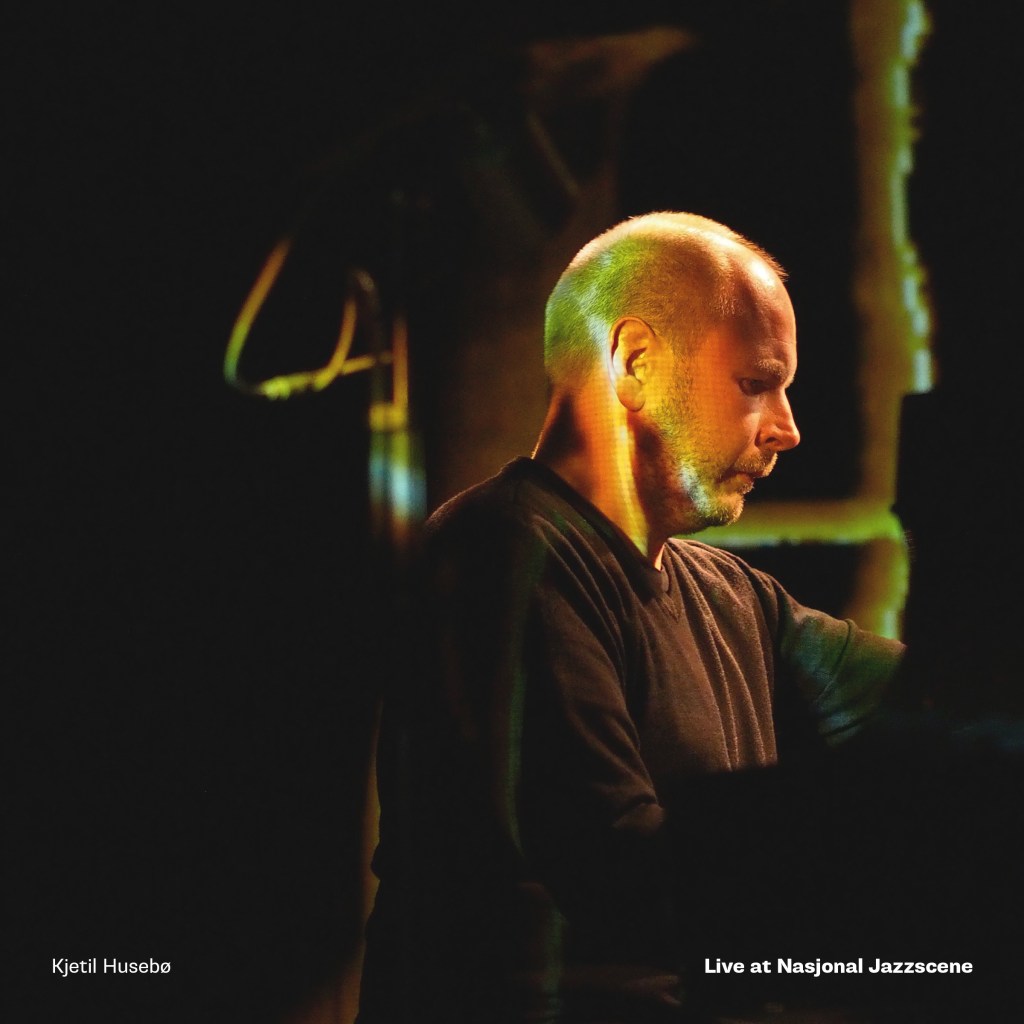
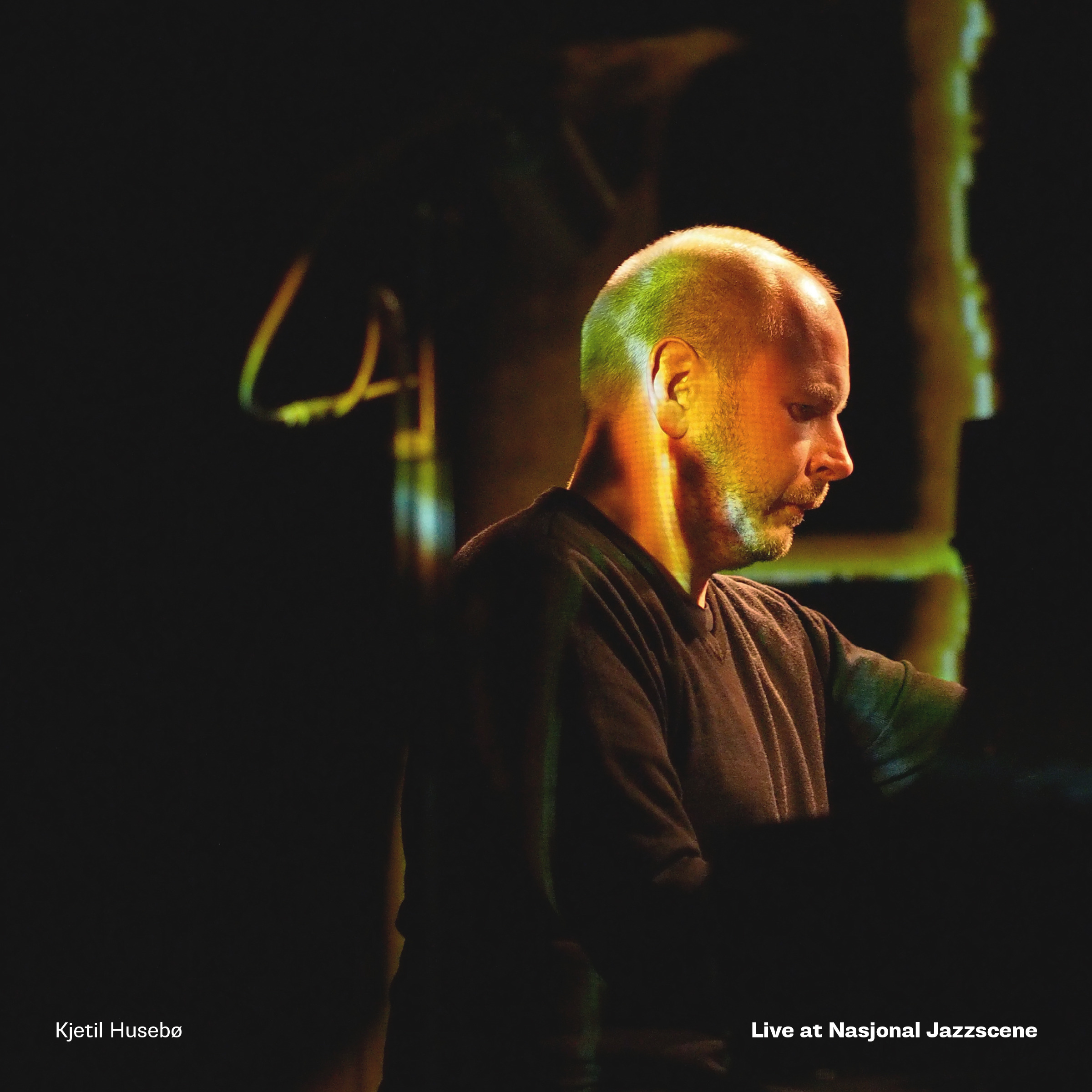
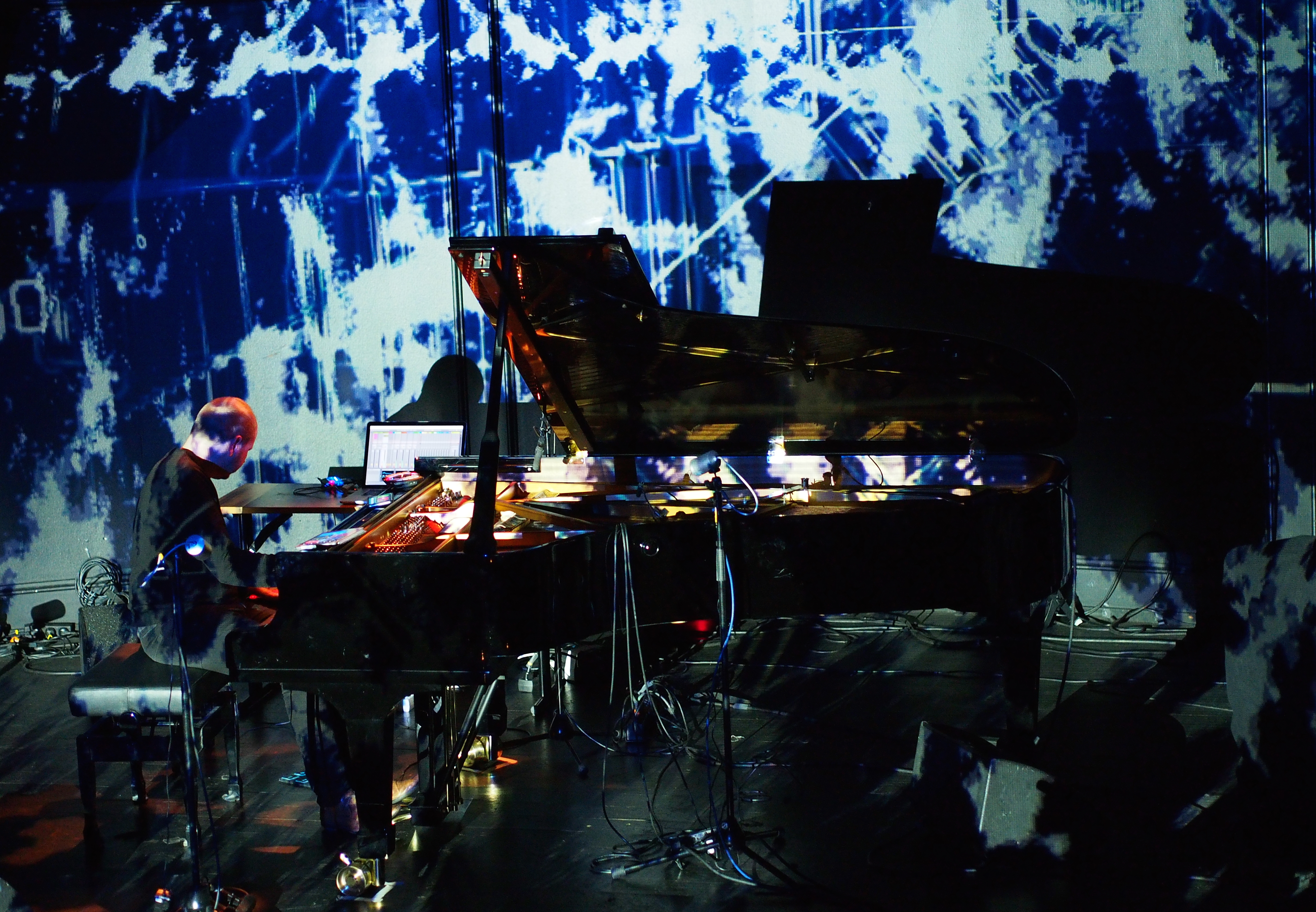
The follow-up, Live at Nasjonal Jazzscene, was recorded during a concert I premiered at Victoria, Nasjonal Jazzscene, during the Tape to Zero festival in Oslo on April 22, 2016. The concert was later released as an album in 2020, documenting an early phase of the project, while already revealing a clear and integrated interplay between piano and live sampling & live electronics.
Credits
Kjetil Husebø — Steinway C grand piano, live sampling, live electronics
Recorded at Nasjonal Jazzscene, Victoria (Tape to Zero), April 22, 2016
Engineer: Johnny Skalleberg
Mixed by Kjetil Husebø at GrandisStudios, Oslo, Norway
Mastered by Helge Sten at Audio Virus Lab, Oslo, Norway
Cover design: Lucas Dietrich, Berlin, Germany
Concert photo: Ruben Olsen Lærk
Piano Transformed – Interspace (2025)
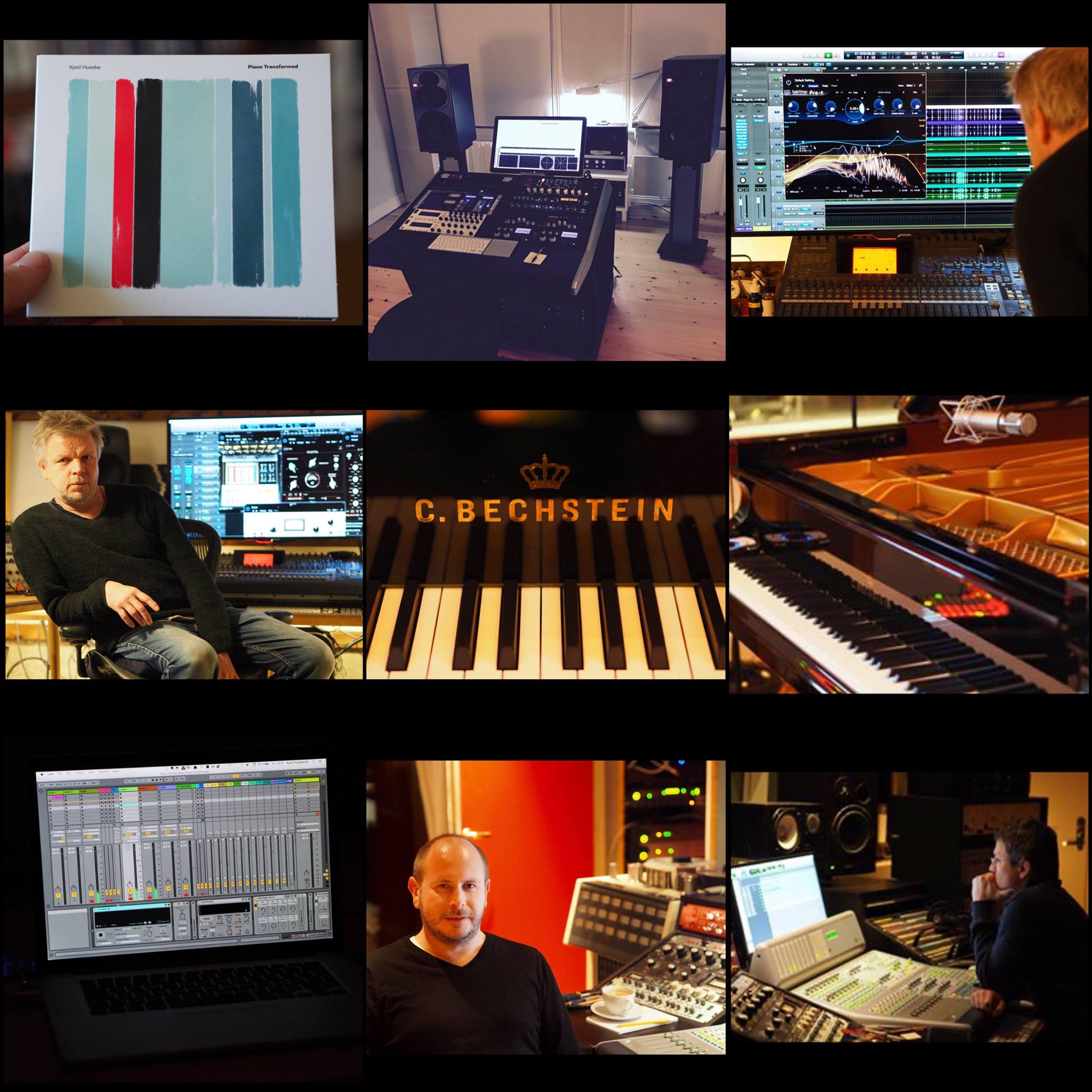
The third album in the series, Piano Transformed – Interspace, was recorded over three days in May 2024 at Ugla lyd, the studio of Morten Qvenild, Nesodden, Norway. The album was co-produced and recorded together with Juhani Silvola, and released as a double album in 2025. Here, both the technical setup and the musical language are significantly further developed, with a stronger emphasis on form, structure, and detailed sound processing.

Credits
Kjetil Husebø — Steinway Model B grand piano, live sampling, electronics, edits
Recorded by Juhani Silvola at Ugla Lyd (Morten Qvenild’s studio), Nesodden, Norway, May 22–24, 2024
Mixed by Kjetil Husebø at GrandisStudios, Oslo, Norway
Mastered by Helge Sten at Audio Virus Lab, Oslo, Norway
Design by Lucas Dietrich, Berlin, Germany
Produced by Kjetil Husebø
Co-produced by Juhani Silvola
Portrait photo (booklet): Jo Michael de Figueiredo
Liner notes: Tore Stavlund
Supported by The Norwegian Composers’ Fund (Det norske komponistfond)

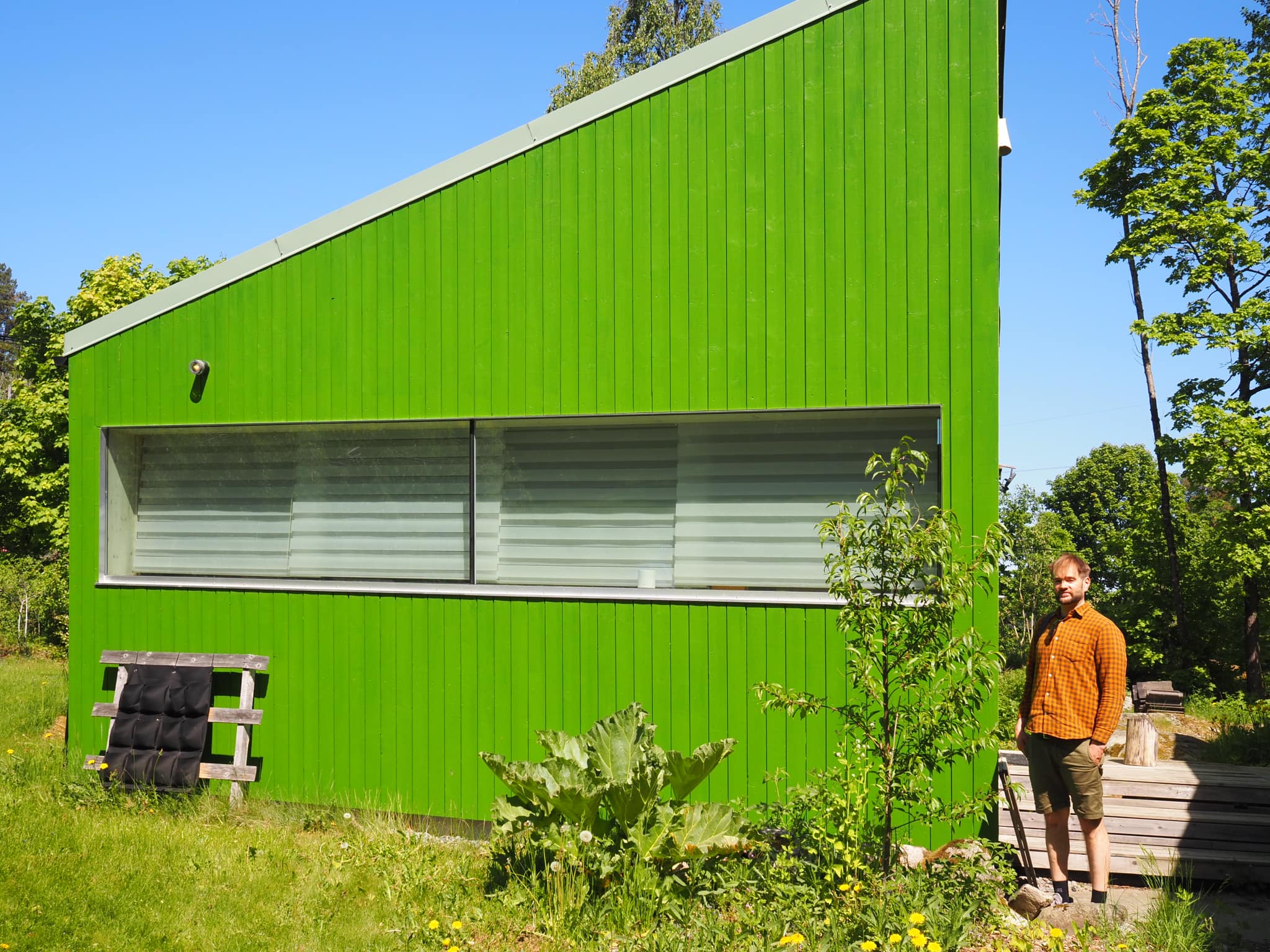
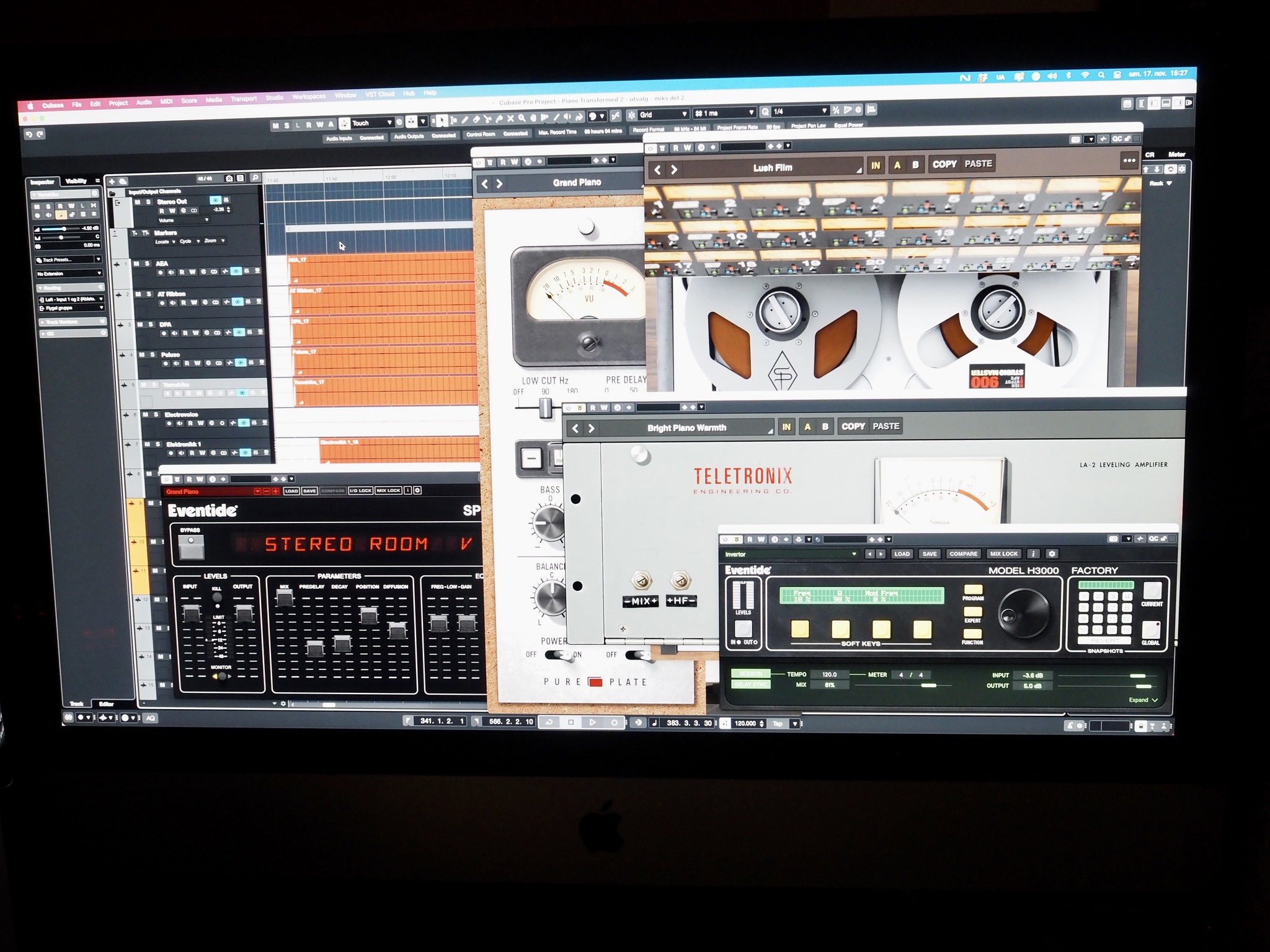
Photos: Recording the double album Piano Transformed – Interspace with co-producer Juhani Silvola at Ugla Lyd, Nesodden, Norway, May 2024. Mixed by myself in autumn 2024
The Setup in Other Albums/Contexts
The Piano Transformed setup has also been an integral part of my other collaborations and album releases from 2022 to 2025, where it has been adapted and further developed in different musical contexts, for example on the duo album Sequential Stream with Arve Henriksen, as well as on Years of Ambiguity and Emerging Narratives, both featuring Arve Henriksen & Eivind Aarset. In these releases, it is primarily the live sampling setup itself, rather than the Piano Transformed project as a concept, that is present. I have used the system to process and interact with the sound of other musicians in the studio, extending the same principles of transformation into collaborative contexts.


Reviews and Responses
The Piano Transformed project has received consistently strong feedback from both Norwegian and international press, highlighting the project’s distinctive artistic identity and its integration of acoustic piano and real-time electronics.
The project is often described as highly original, with a clear and personal artistic voice. A central aspect of the reception is the close relationship between piano and technology, where the two elements are perceived as deeply interconnected rather than separate layers. This integration is seen as opening up an expanded sonic space that goes beyond traditional solo piano performance.
The music is frequently characterized by its breadth and depth, combining detailed sound work with a wide emotional range. The use of live sampling and electronics extends the natural palette of the piano into more abstract and immersive sound environments, while still maintaining a strong sense of musical coherence.
Many responses also highlight the role of contrast in the music. It moves between density and space, acoustic and electronic elements, structure and openness, creating a dynamic and constantly shifting listening experience. These contrasts are not perceived as oppositions, but as interconnected elements within a larger musical flow.
At the same time, the music is often described as demanding, requiring focused listening, but also as rewarding over time. It invites the listener into a process of exploration, where new details and relationships emerge with each encounter.
Overall, the response points to a body of work that balances experimentation with clarity, and complexity with sensitivity—where sound, process, and form are closely intertwined in a unified and evolving musical language.
Response & Reviews Piano Transformed – Interspace (2025)
Response & Reviews Piano Transformed (2017)
Technical Setup/System
The core of Piano Transformed setup consists of a comprehensive and flexible software-based system built around:
- Ableton Live 10 Suite (original setup made in Live 9 in 2016, converted to Ableton Live 10 in 2018)
- Max for Live (LiveSampler, Granulator II, GrainFreeze, Envelope Follower, etc.)
- Native Instruments Reaktor VST plugin (Ensembles: Twisted Tools S-Layer, Grainmaster, Native Instruments/Tim Exile – The Finger, etc.)
- A wide range of VST plugins audio effects (Eventide, Arturia, Audio Damage, Fabfilter, Native Instruments, UVI, Madrona Labs, Valhalla, Glitchmachines, Plugin Alliance, SoundToys, etc.)
This forms the core of my Piano Transformed system, which has been continuously developed in 2016 and expanded since then.
The main setup is structured around several audio and midi tracks/functions:
- One dedicated audio track for the grand piano, which can be routed to other audio and midi tracks, including external hardware effects
- One MIDI track with the Reaktor Twisted Tools patch S-Layer, controlled via my audio with Envelope Follower triggering samples. I use my own grand piano and Korg Wavedrum samples within the S-Layer patch, where they are triggered and continuously randomized in dialogue with my live piano playing
- One audio track with Granulator II for live sampling (a Max for Live patch developed by Robert Henke)
- Two audio tracks with loopers (the Ableton Live Looper), one of them with a expansive drone and overtone processing Max for live patch
- One audio track with a tape looper (Audio Damage Enso)
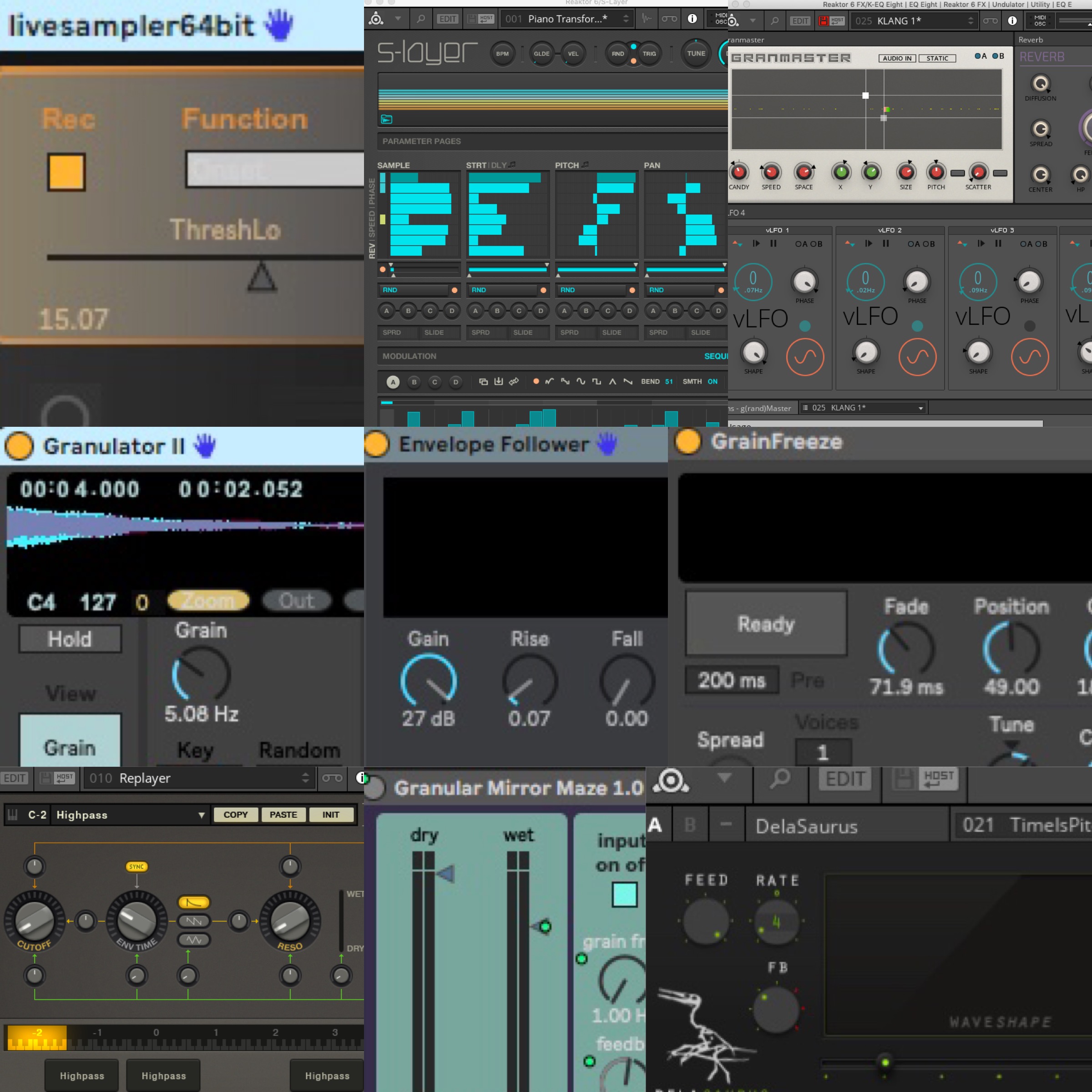
In addition, the system includes 12 return audio tracks with various effects, samplers, and processors. These are fed via 12 sends from both internal and external audio and MIDI tracks, and are used selectively rather than all at once, resulting in a highly flexible routing architecture.
In 2026, I also began incorporating Max for Live devices that use LFOs to modulate parameters within the send/return system. These generate evolving and sometimes unpredictable control signals, which can be routed to both internal and external effects, adding another layer of movement, variation, and interaction to the effects and samplers.
A key component of the setup is also a custom Max for Live patch named LiveSampler, developed by Anders Tveit in 2015. This patch continuously samples while I play and immediately plays the material back, creating a very tight interaction between piano playing, action and sound.
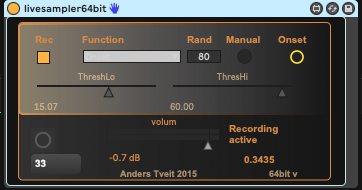
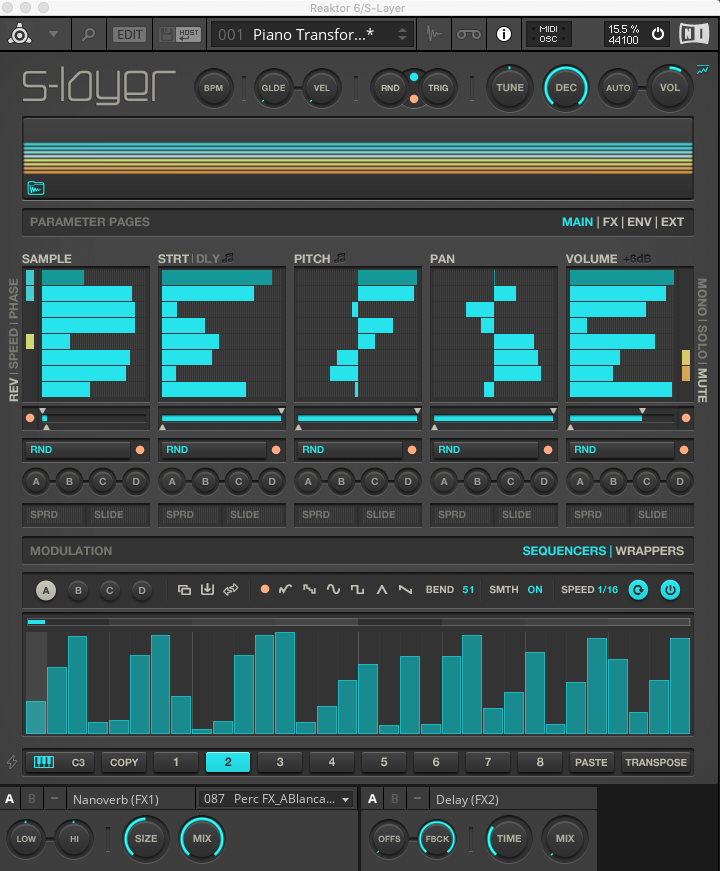
In the tracks below, the use of this LiveSampler patch is clearly audible. It produces highly rhythmic, abstract transients that interact closely with my piano playing, emphasizing the percussive dimension of the instrument. I also combine it with the Native Instruments Reaktor patch Twisted Tools S-Layer, which generates and triggers layered sample material in real time. Together, these elements create a dynamic interplay between acoustic gestures and processed, fragmented sound.
What makes the Piano Transformed system particularly flexible is the routing. Audio can be sent between tracks, devices, processed in multiple stages, and resampled repeatedly. In practice, this means that live sampling can itself be sampled again, further processed, and sent into new effects and samplers—forming a continuous and evolving signal flow.
Live sampling of live sampling of live sampling—repeated multiple times. What I find particularly exciting is how the piano can meet itself in so many different forms and transformations.
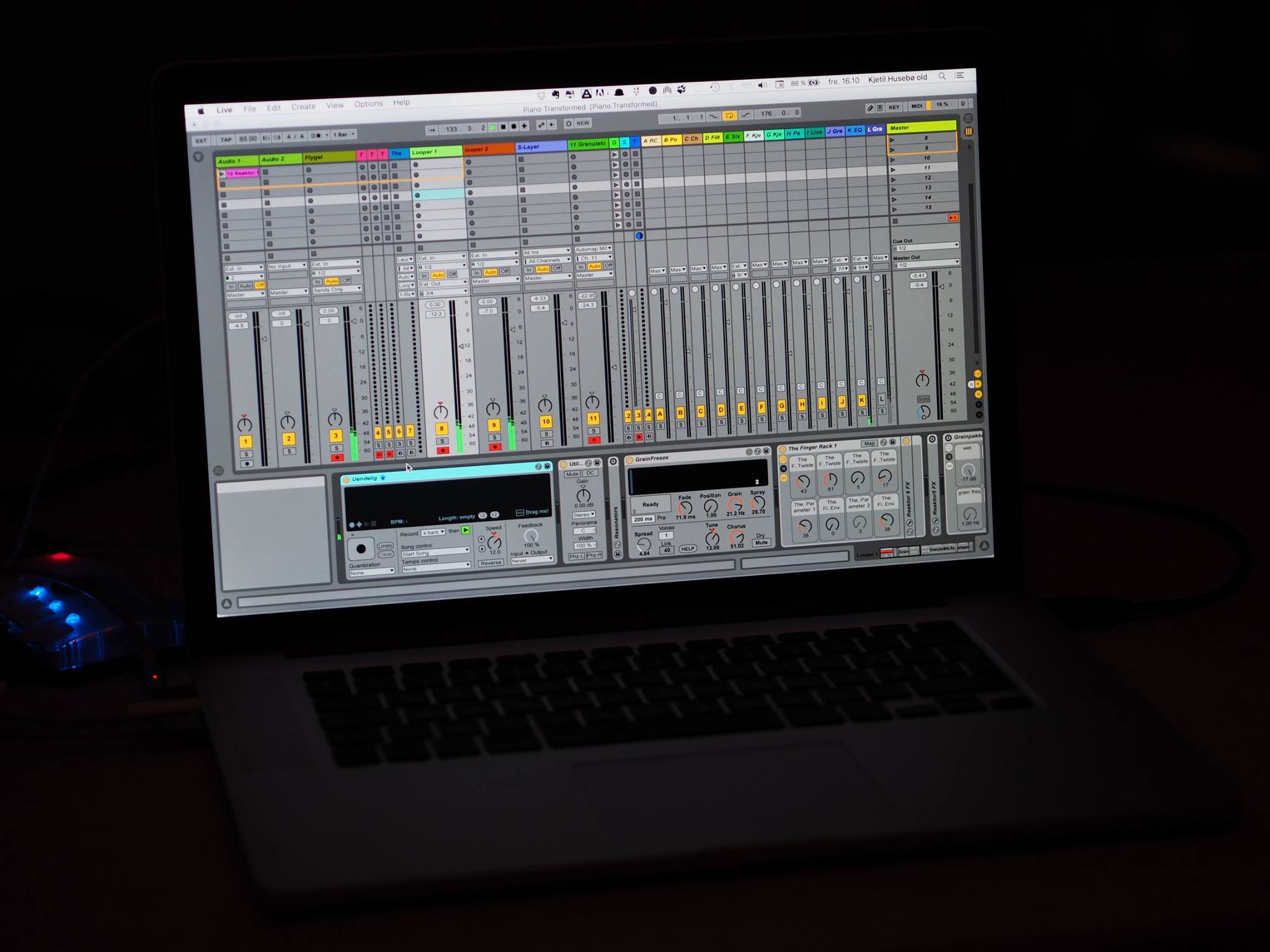
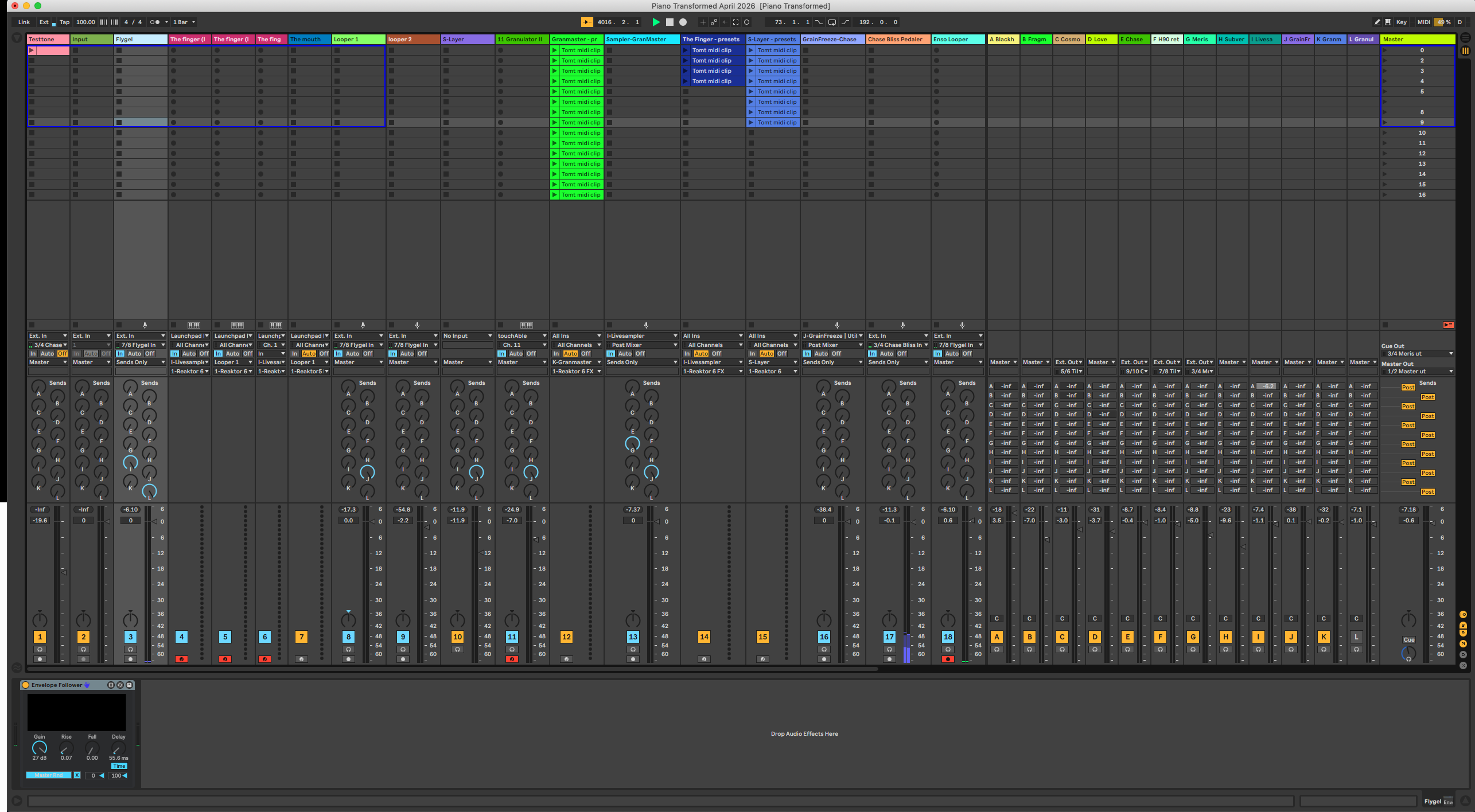
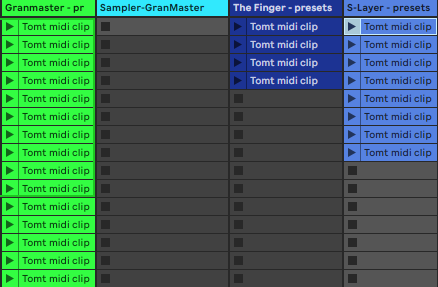
What makes the Piano Transformed system particularly flexible is the routing. Audio can be sent between tracks, devices, processed in multiple stages, and resampled repeatedly. In practice, this means that live sampling can itself be sampled again, further processed, and sent into new effects and samplers—forming a continuous and evolving signal flow.
Live sampling of live sampling of live sampling—repeated multiple times. What I find particularly exciting is how the piano can meet itself in so many different forms and transformations.
At the core of the system is the main piano audio track, combined with the LiveSampler patch in Max for Live and the S-Layer patch in Native Instruments Reaktor. Together, these elements form the central engine of the process, where the acoustic piano is continuously captured, transformed, and reintroduced in new sonic contexts.
How I Control the System
I control the entire Piano Transformed system in real time using these controllers:
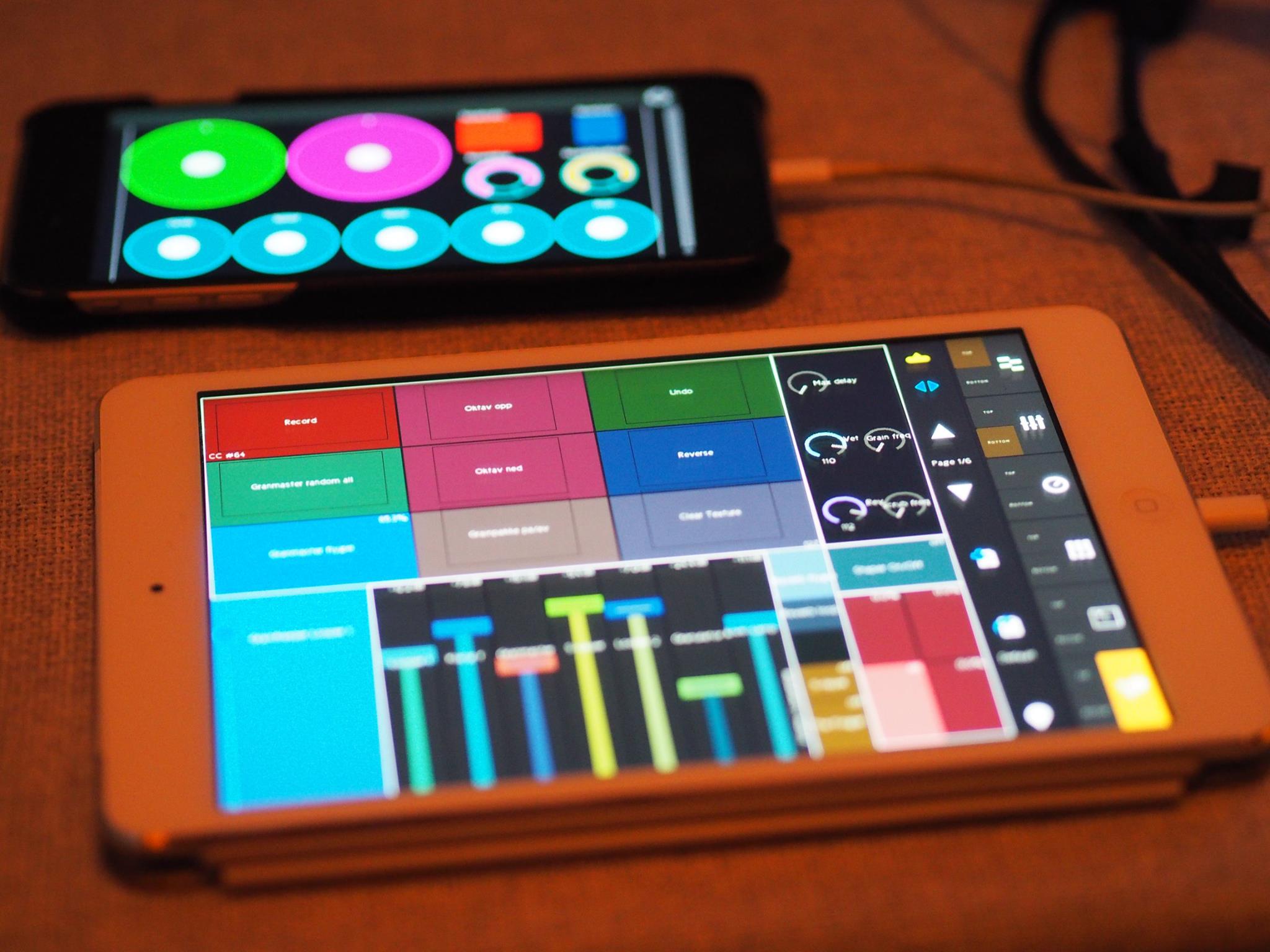
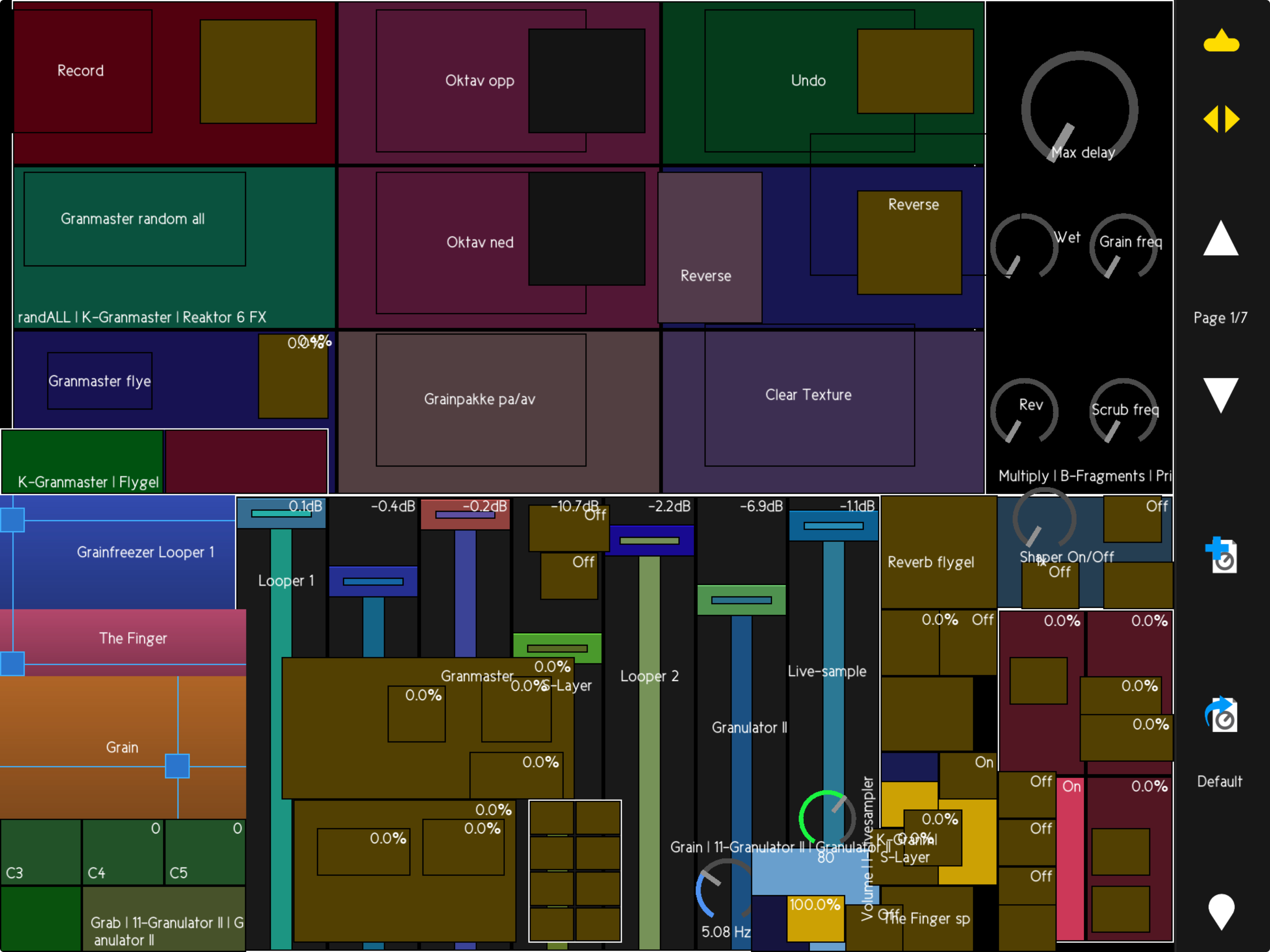
- TouchAble 3 application for iPad/iPhone (customized setup)
- Lemur (customized setup)
- Controlled via three iPads
- Two Novation Launchpad controllers (controlling plugins/effects)
- Numark Orbit
These controllers and interfaces give me direct access to a complex system, both in live performance and in the studio. The performative aspect lies in the balance between control and unpredictability. While I can shape many parameters in detail, the system is also designed to allow unexpected events and emergent structures to occur—often where the most interesting musical moments arise.
A central concept and goal in this project and setup is to orchestrate in real time using the piano together with live sampling and electronics. I am less interested in traditional looping—where layers are built and then played over—and more focused on shaping and orchestrating multiple elements simultaneously.
This means that while I play the piano, I also control the sampling and electronic processes in real time—through the piano itself, three iPads, various controllers, hardware effects/samplers and three foot controllers (expression pedals). The different elements are continuously introduced, transformed, and balanced within the same moment.
This approach requires a high level of coordination. It involves not only playing, but also listening and making decisions across different time perspectives—responding to what is happening in the present while anticipating what is about to unfold.
What I find most compelling is the balance between control and emergence—when I feel in control, yet the system as a whole takes me somewhere new, beyond what I had anticipated. The complexity of the system makes it both demanding and deeply rewarding to work with.
From Software to Hybrid System
For eight years, Piano Transformed was a purely software-based system, combined with hardware controllers. In 2024, I began expanding the software setup with various hardware effects, introducing new layers of sound processing and interaction:
- Soma Cosmos (a granular/tape-style looper that captures and continuously reshapes incoming audio into evolving textures and layers)
- Eventide H90 (a high-end multi-effects processor offering a wide range of algorithms—delays, reverbs, modulation, pitch processing, granular techniques, filtering, dynamics, saturation and distortion, as well as time-based and spectral transformations—capable of both subtle enhancement and more radical reshaping of the material)
- Meris MercuryX (an advanced modular reverb system capable of both subtle spatial processing and complex, expansive ambient environments)
2006
In 2026, I further developed this hybrid system, adding both additional processing depth and structural complexity. This remains an ongoing process, and I continue to develop and refine the system
- Meris LVX (a modular delay system with deep routing and sequencing possibilities, enabling detailed control over timing, feedback, and layered delay structures)
- Soma Warp (a real-time spectral and time-based processor that transforms incoming audio through stretching, pitch shifting, and harmonic reconfiguration, enabling continuous movement between defined gestures and more diffuse, evolving textures)
At the same time, I expanded the setup with several hardware devices from from Chase Bliss:
- Onward (a dynamic sampler that captures and manipulates sound in real time based on input signal behavior)
- Lossy (a digital degradation processor that introduces artifacts such as bit reduction, compression, and unstable signal characteristics)
- Reverse Mode C (a reverse delay that continuously recontextualizes incoming audio in reversed temporal structures)
- Mood MKII (a micro-looper and multi-effect combining granular looping, delay, and reverb into a compact, exploratory system)
- Lost + Found (a multi-effect focused on fragmentation, reordering, and recombination of audio material)
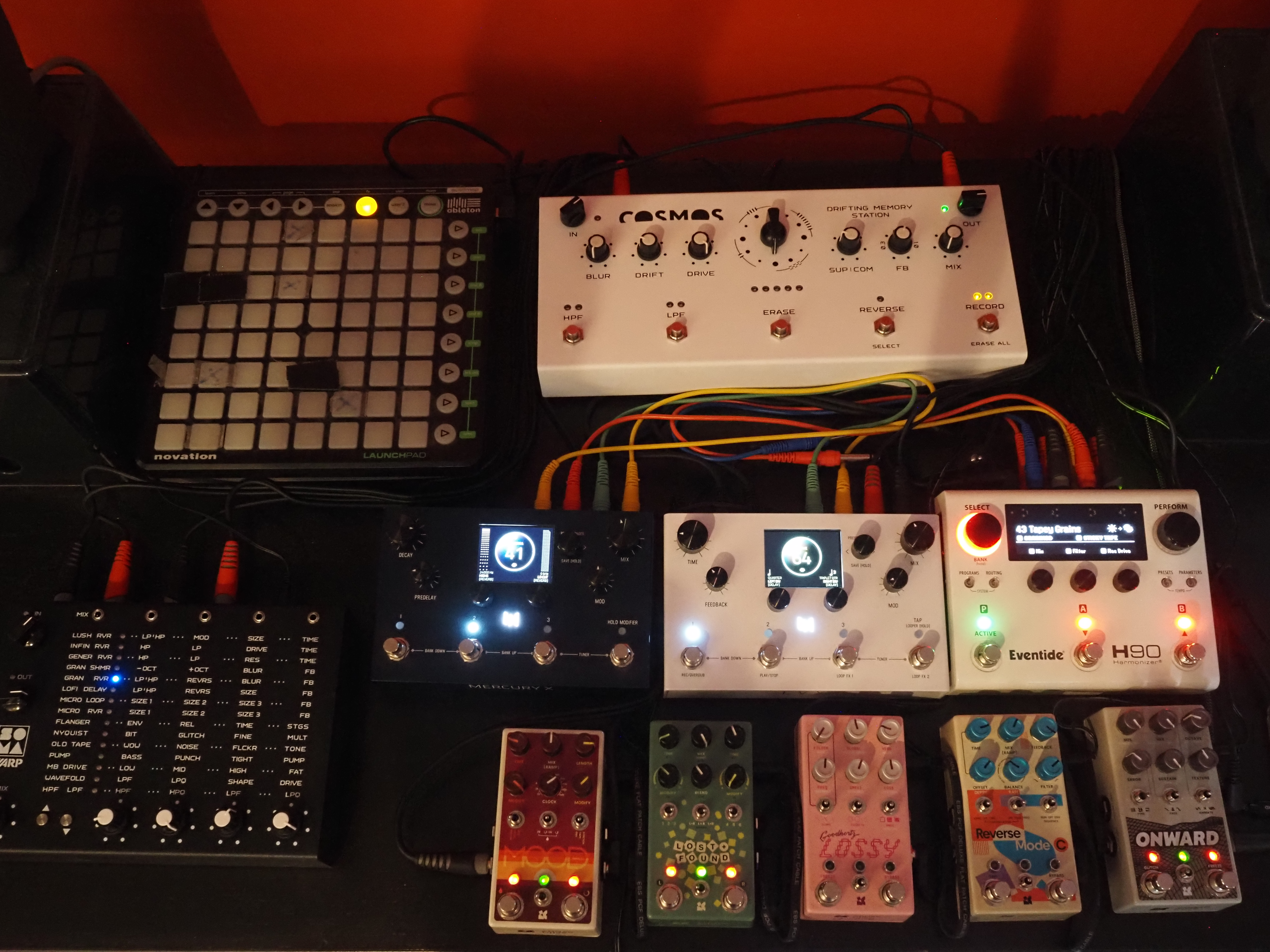
The hardware section is organized into four distinct signal buses that can be integrated anywhere within the system. I structure these as four separate chains: one dedicated to Soma Cosmos and Warp, one built around the Eventide H90, one based on the Meris LVX and Mercury X, and one dedicated to the Chase Bliss pedals. Signals can be routed freely between these chains and back into the software environment, allowing for fluid movement across multiple stages of processing and enabling continuous transformation and recombination of the material.
Signal flow is a crucial aspect of the Piano Transformed system. How sound moves through the setup—between piano, software, and hardware—directly shapes the musical result. Small changes in routing, order, or gain structure can significantly affect texture, depth, and spatial perception. The system is therefore not static, but continuously refined through listening and adjustment.
For example, a hardware chain such as:
Chase Bliss pedals — Onward → Reverse Mode C → Lossy → Lost + Found → MOOD MKII (serial)
creates a very specific progression of transformations, where each stage builds on and reshapes the previous one. Reordering these devices results in a fundamentally different sonic outcome.
The Eventide H90 can be configured in both parallel and serial modes. In parallel, multiple processes unfold simultaneously, creating a more open and multidimensional texture. In serial, the signal passes through a defined sequence of transformations, where each stage reshapes the previous one. Moving between these modes significantly alters both structure and result.
A chain such as:
Meris LVX → Meris Mercury X (serial)
establishes a clear progression from temporal structuring to spatial expansion. The LVX shapes the material through delay-based processes, which are then extended into broader spatial environments by the Mercury X. Reordering these devices would result in a markedly different sonic character.
The chains can also be interconnected in more extended signal paths. For example, I can route the Soma Cosmos into the Eventide H90, from there into the Chase Bliss chain, and finally into the Meris processors. This creates a long, evolving signal trajectory where each stage reshapes the material before passing it on. Such configurations can become quite extensive, but also open up a wide and creative field of possibilities. Or I can route the Soma Warp directly to the Grand Piano or the Reaktor S-Layer patch or the LiveSampler patch.
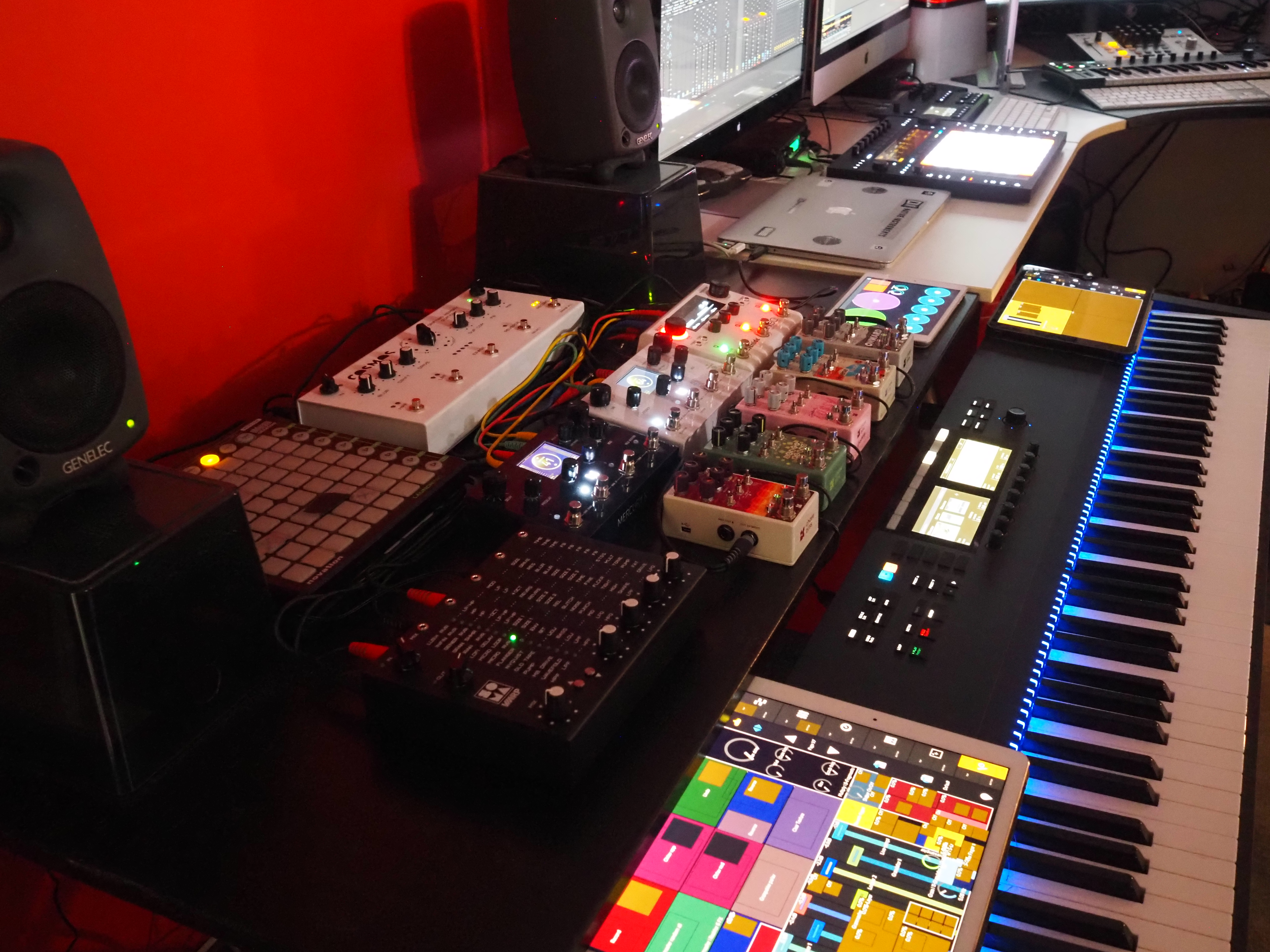
Piano Transformed 2.0 – 2026
This development into a hybrid system marks what I now refer to as Piano Transformed 2.0.
At this stage, software and hardware are no longer separate layers, but form a hybrid and unified system in which the boundaries between instrument, process, and composition are largely dissolved. The piano is not only an instrument, but an entry point into a network of real-time processing, where sound is continuously captured, transformed, and reintroduced.
In Piano Transformed 2.0, the system itself becomes an active musical partner. It responds, reshapes, and sometimes resists the material I introduce. This creates a shifting balance between control and unpredictability, where the music emerges through interaction rather than being fully predetermined.
The expanded integration of hardware adds new dimensions to the sound and to the way I work. There is a greater sense of physicality, tactility, and immediacy, combined with the depth and flexibility of the software environment. Sound can move across multiple layers of processing—looping, granulation, spectral shaping, delay structures, and spatial transformations—often simultaneously.
At the same time, this increased complexity requires a more conscious approach to limitation. With so many possible directions, composing becomes as much about choosing what not to do as what to do. Reduction, focus, and listening become essential tools in shaping the music.
Musically, this opens up a wider field of contrasts and transformations. A single gesture can unfold into multiple parallel layers—long drones, fragmented textures, percussive elements, and spectral resonances—each evolving at different timescales. The music can move fluidly between density and openness, between structure and dissolution.
For me, Piano Transformed 2.0 is therefore not only a technological development, but an artistic one. It reflects an ongoing exploration of how my playing and my sound can be shaped in real time, how form can emerge from process, and how technology can become an integrated part of a listening, dynamic, and form-generating practice.
With support from Arts Council Norway / the Norwegian Cultural Directorate (Kulturrådet / Kulturdirektoratet) and the Composers’ Remuneration Fund (Komponistenes vederlagsfond), I am currently developing the project further, both technically and artistically.
A new album will also be recorded later in 2026 and released in 2027.
As of 2026, the project sounds better than ever, and the setup has been expanded, becoming more flexible and opening up new sonic approaches and possibilities.
Read also
Fifteen Questions (2025)
Å lytte til livet (2025)
Now’s The Time (2023)
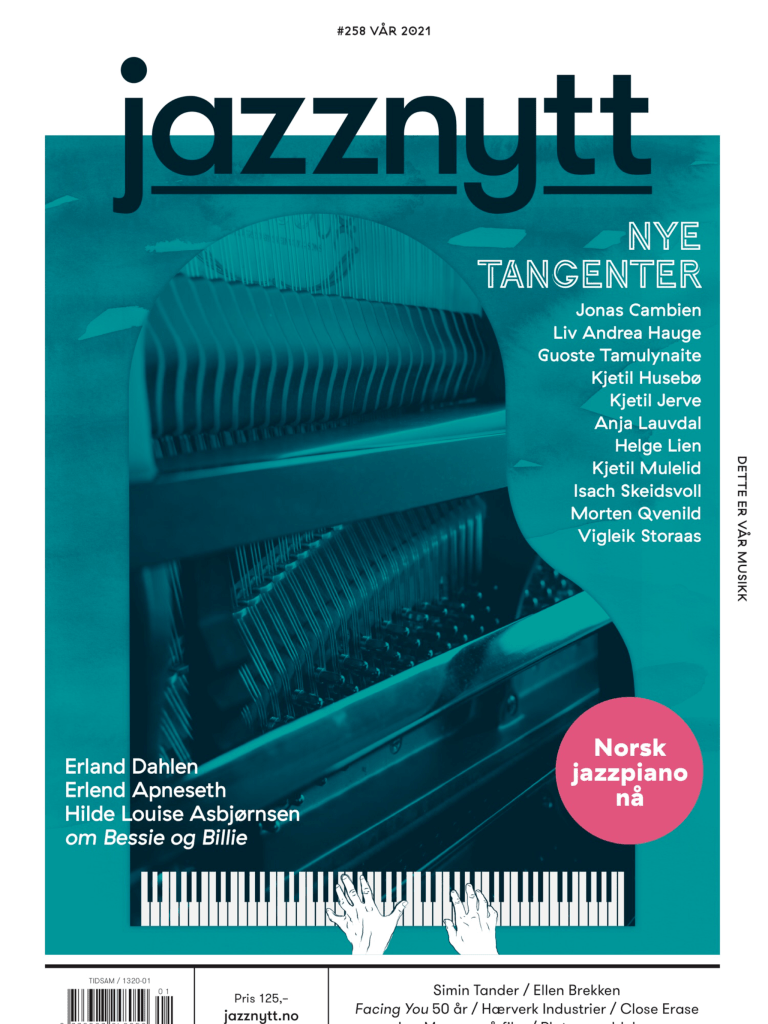
Nye tangenter – Jazznytt (2021)
3 Quarks Daily (2017)
Response & Reviews Piano Transformed – Interspace (2025)