
Musician, Producer, Composer, Sound Designer, Label Owner and Festival Curator

Kjetil Husebø (b. May 2, 1975, Bergen) is a Norwegian composer, producer, and musician with a background spanning jazz, improvisation, electronica, ambient, contemporary, house, pop, crossover, and folk music. A classically trained pianist, he is equally at home with synthesizers, samplers, and live electronics.
As both pianist and electronic artist, Husebø has focused on merging the acoustic resonance of the grand piano with live sampling and electronics. Through his project Piano Transformed, he has created a unique performance instrument in which the piano functions not only as a sound source but also as a real-time controller—fragments played on the keys are simultaneously sampled, reshaped, and transformed into new sonic textures.
His work brings together acoustic and digital sources to create immersive sound worlds where silence, movement, and transformation are central. Treating sound as a malleable material, he employs techniques such as granular sampling, spectral processing, and processed field recordings. Critics have noted his rare combination of technical mastery and intuitive musicality, and his deep awareness of sound as material—qualities that allow him to shape form, absence, and space in ways that are both methodical and poetic. His practice often moves along the borders of music, sound art, and architectural thinking, with the aim of creating cohesive projects grounded in clear conceptual foundations.
Early Years
Kjetil began playing synthesizers before he ever touched the piano, and already in primary school he was a true synth nerd. He played in several bands and joined Ten Sing in Bergen in 1990–1991. After that came a year on the music program at Ulsteinvik Folkehøgskule (1991–1992), followed by three years on the music program at Voss Gymnas (1992–1995). During this period, Kjetil played in various bands and projects — spanning pop, jazz, classical music, folk music, and more.
Husebø made his debut with the crossover band Coffee Pain at Nattjazz in Bergen in 1996. He wrote much of the band’s music, which also included members of the Norwegian group Real Ones.
The following year, he composed commissioned music for the municipality of Modalen, based on selected poems and texts by the Norwegian poet Olav Nygard (1884–1924). In the late 1990s, he collaborated with the Bhutanese singer Jigme Drupka and worked with Norwegian electronic artist Erot (Tore Kroknes, 1977-2001). Alongside his musical pursuits, Husebø studied History of Ideas at the University of Oslo, where he completed his major degree (hovedfag) in 2005.
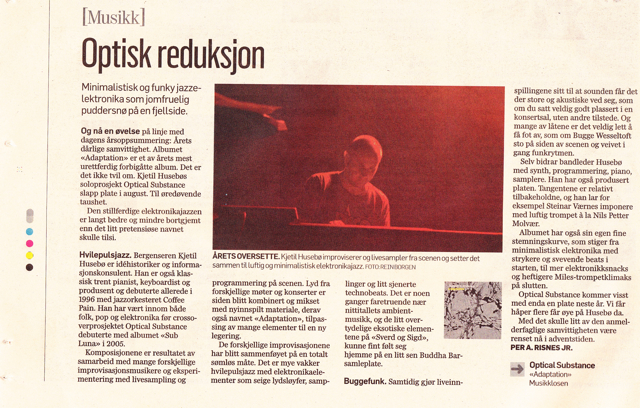
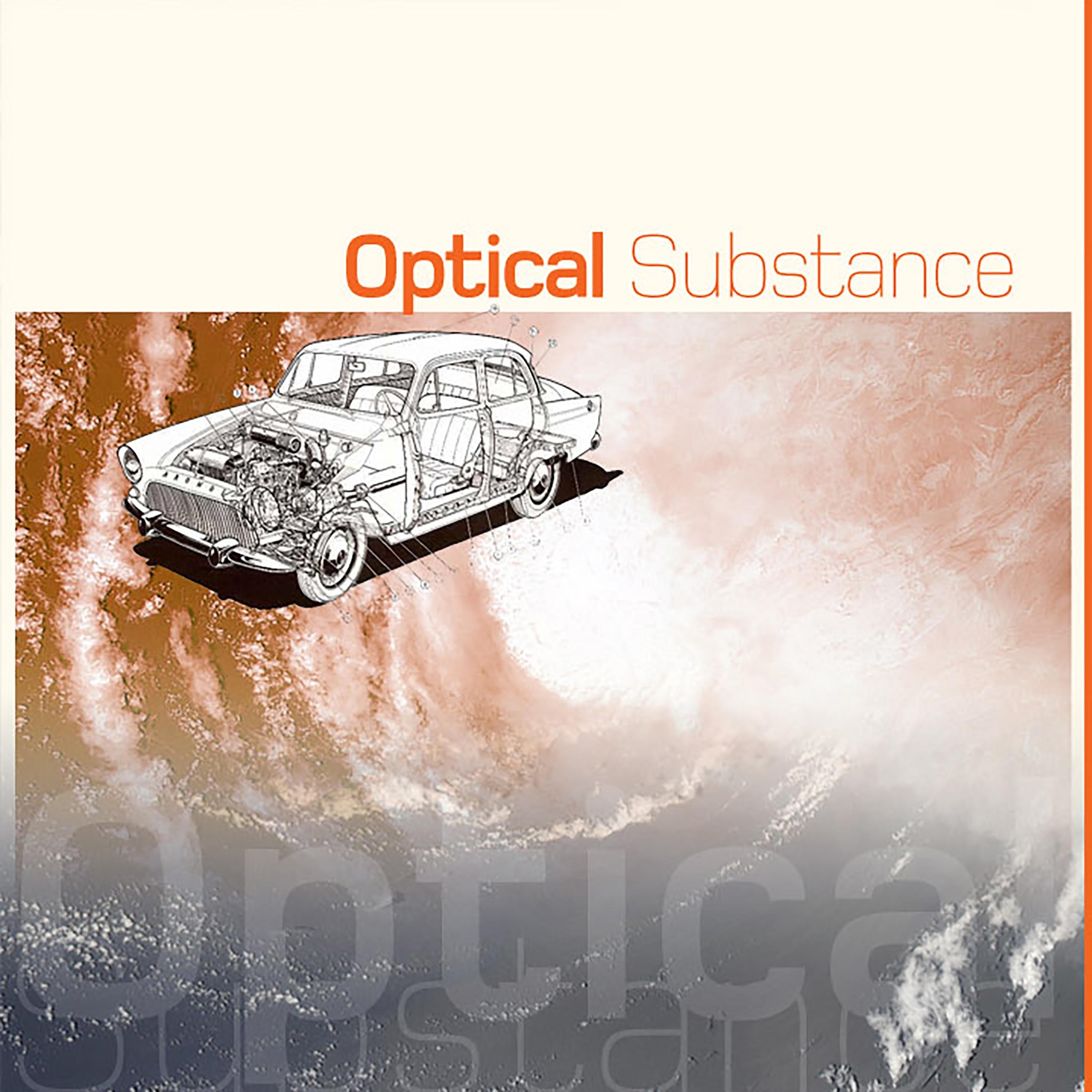
In the early 2000s he performed with the pop band Bloom and launched his own electronic crossover project Optical Substance, where production and programming were central. The debut album Sub Luna (2005) was followed by Adaptation (2010). Optical Substance performed at norwegian music festivals and venues such as Moldejazz, Parkteateret, Nasjonal Jazzscene, Ståoppjazz.
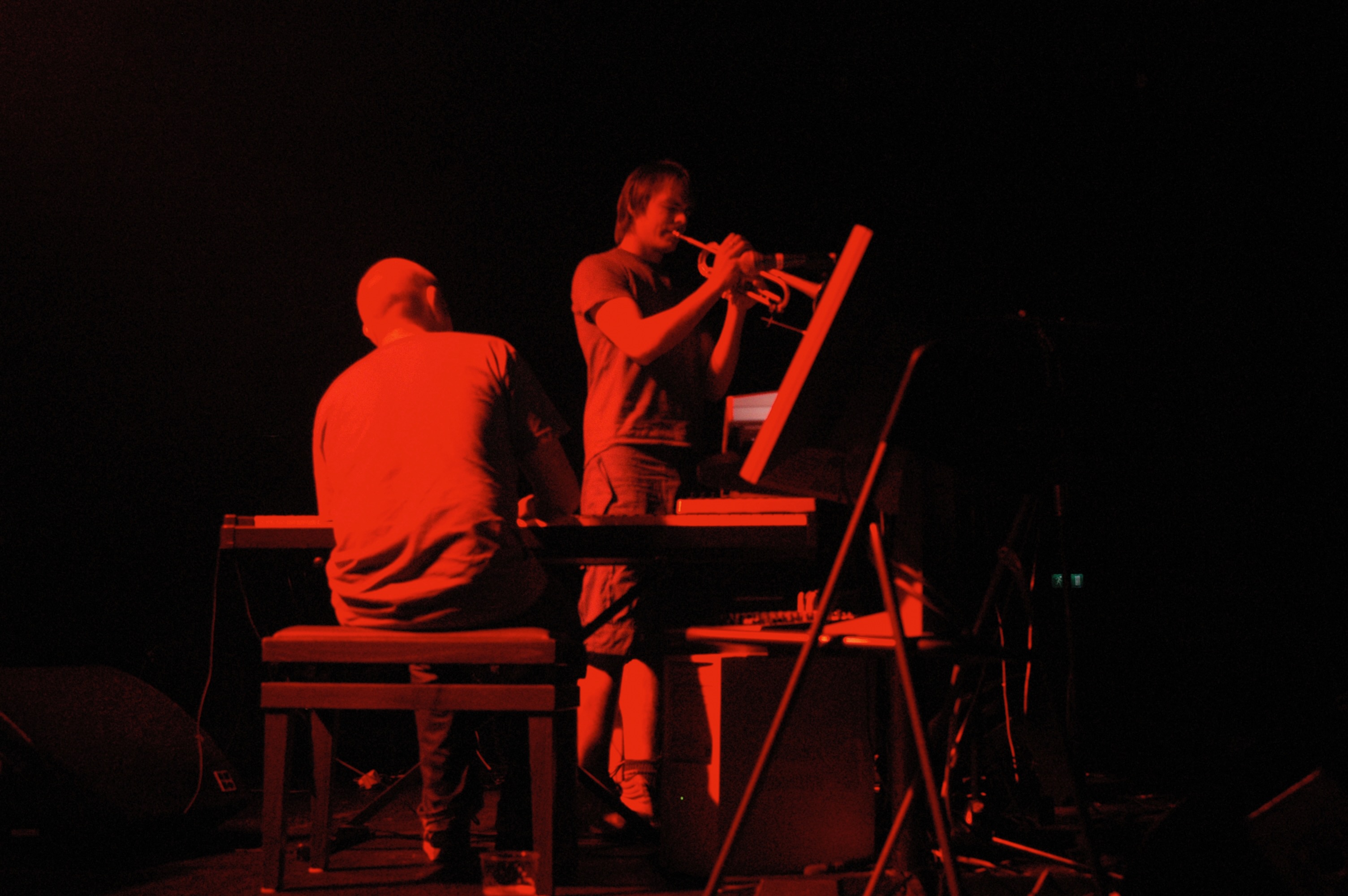
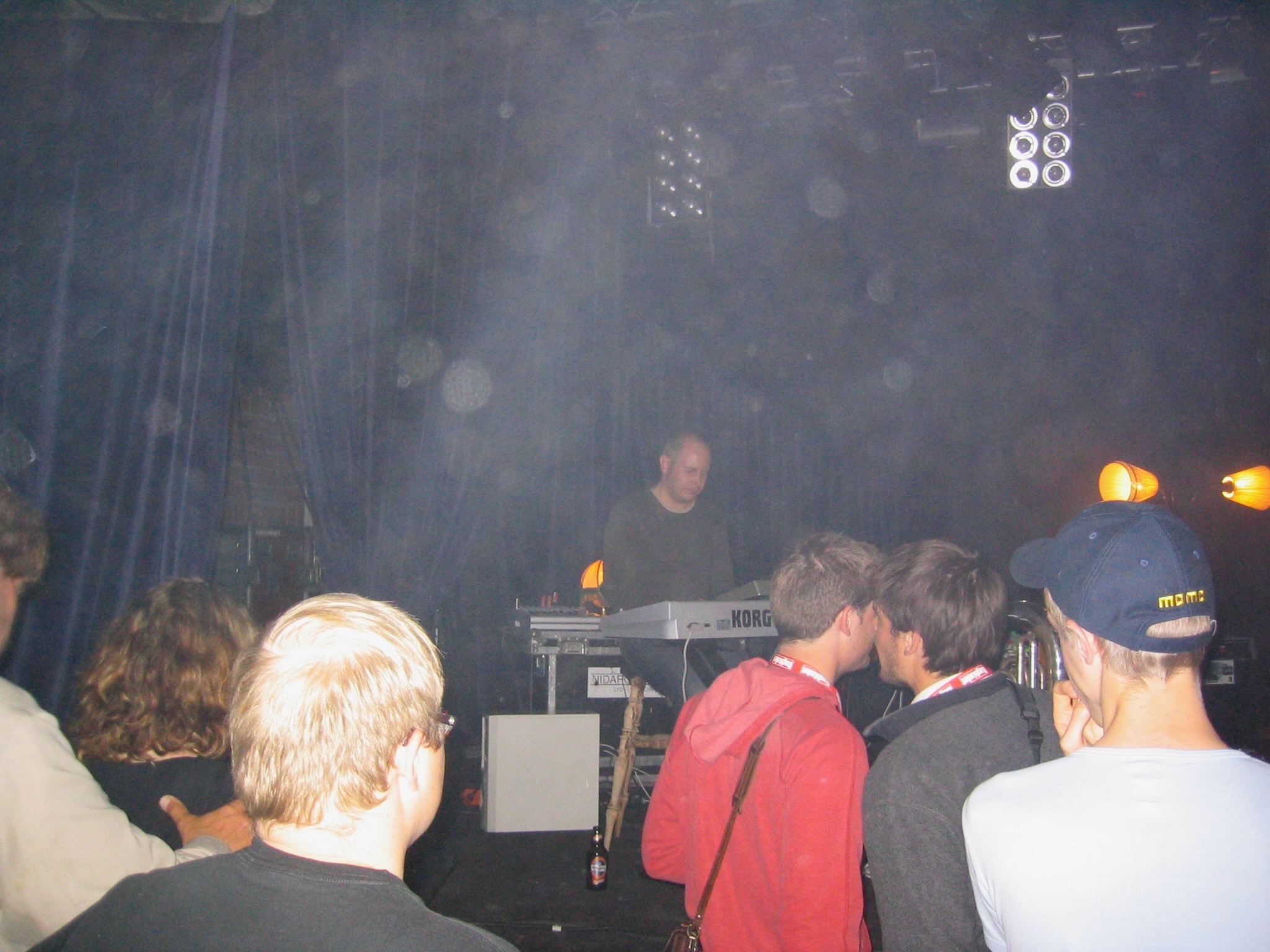


Improvisation has always been at the core of Husebø’s practice, but from 2006 onwards he increasingly focused on live electronics and live sampling, collaborating with musicians including Audun Waage, Alex Gunia, Bergmund Waal Skaslien, Li Tieqiao, Eivind Lønning and many others.
2012–2018
From 2012 to 2015, Husebø released a series of albums exploring both solo piano and electronics:
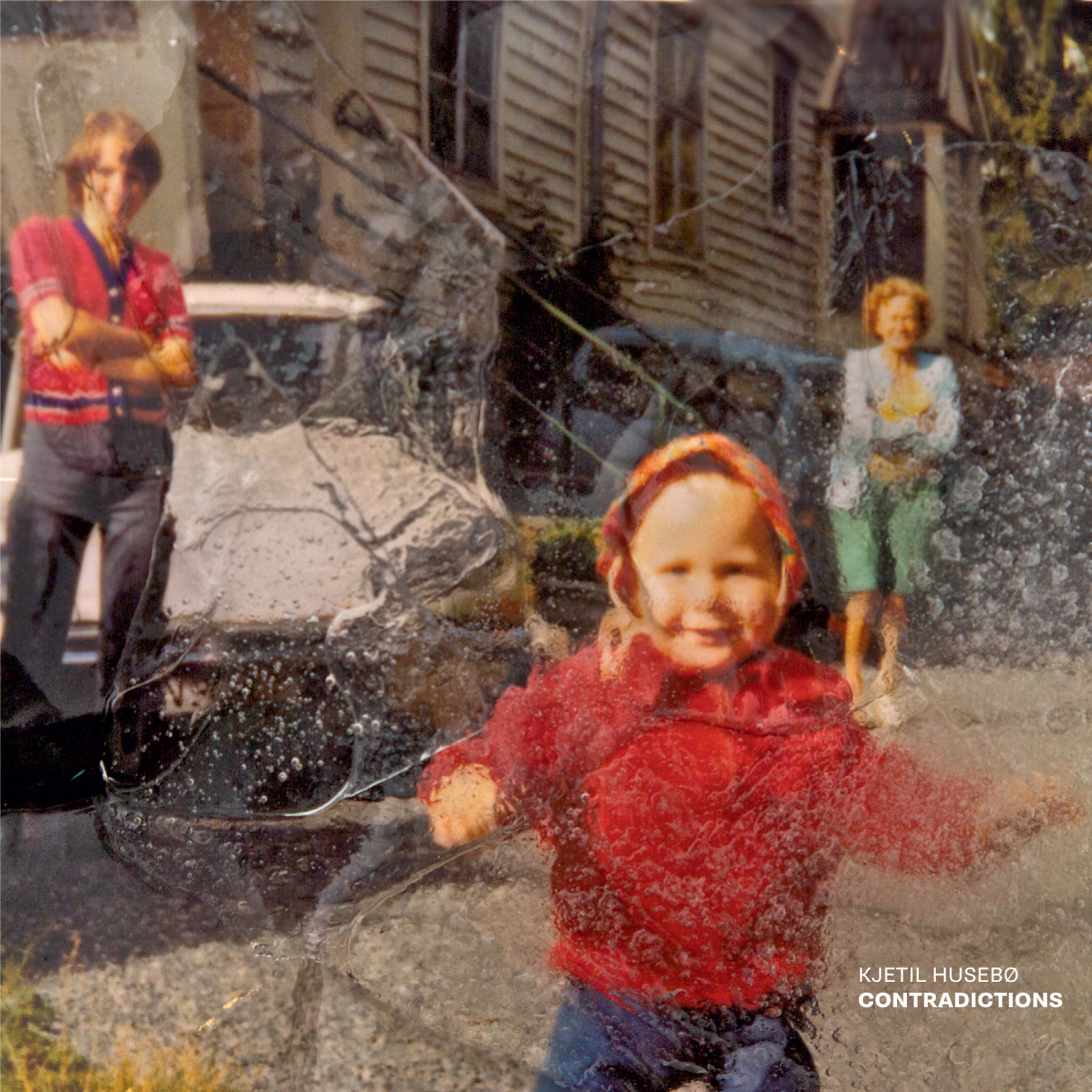
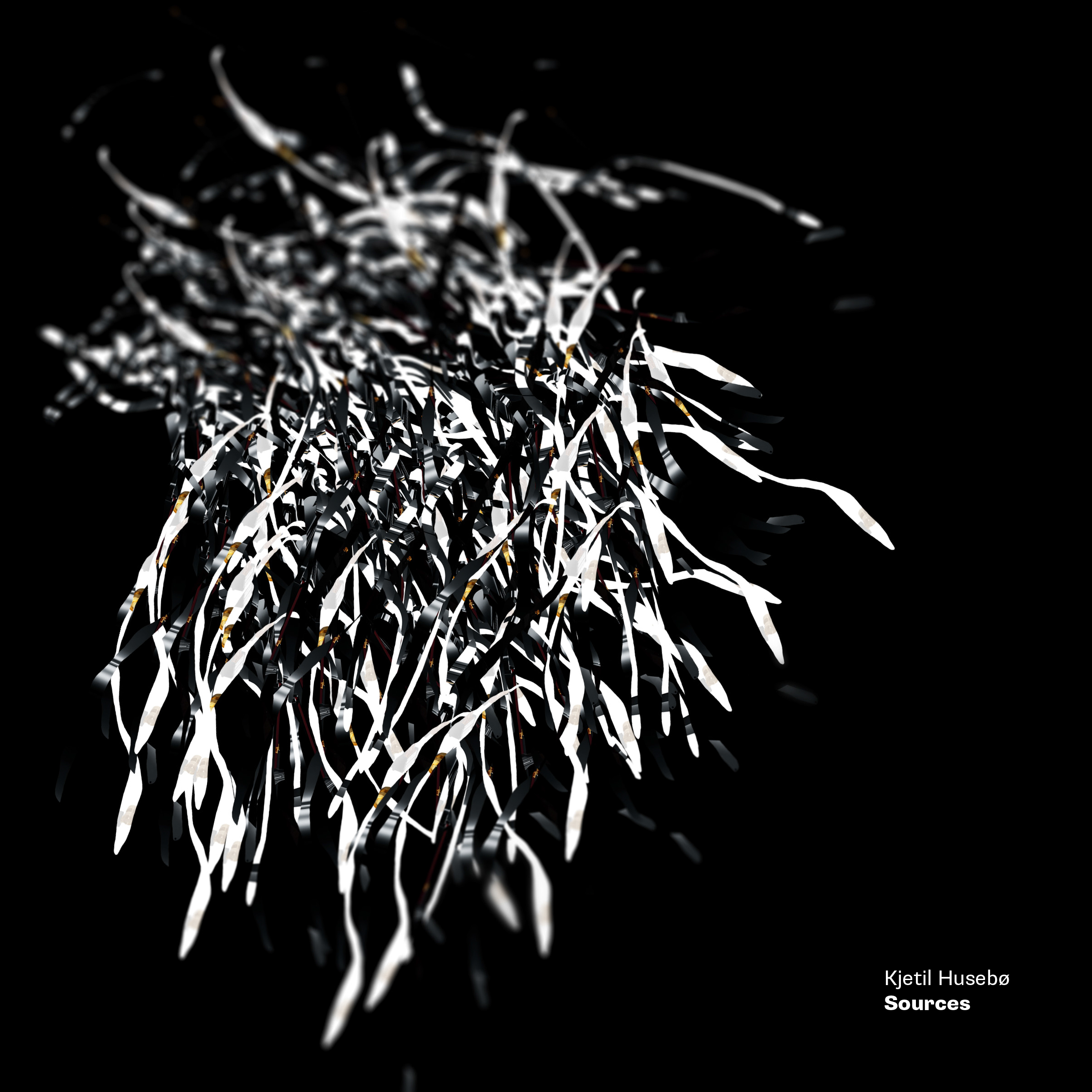
- Contradictions (2012) and Sources (2013), improvised on a Steinway D grand piano.
- Skyggespill – Morphing Between Spaces and Phases (2014), his first vinyl release, blending electronics, synthesizers and field recordings.
- Steps (2015), an acoustic piano album recorded by Jan Erik Kongshaug at Rainbow Studio.


In 2017, he released Piano Transformed, the first album in the series that gave name to his hybrid project. This was followed by the album Live at Nasjonal Jazzscene (2020).


He also co-founded and curated the festival Tape to Zero (2011-2016) at Nasjonal Jazzscene, Oslo, presenting both his own performances and collaborations with leading Norwegian improvisers.



2019–2025


From 2019 onward, Husebø expanded his work with more synthesis, sampling, and electroacoustics:
- Sequential Stream (2022), a duo album with trumpeter Arve Henriksen, blending piano, live electronics, and Henriksen’s unmistakable sound world.
- Years of Ambiguity (2023), a full-length release featuring both Henriksen and guitarist Eivind Aarset.
- Emerging Narratives (2024), continuing these collaborations, combining synths, samplers, and live processing in an expansive ambient-jazz setting.
- Piano Transformed – Interspace (2025), his first double album and the third in the Piano Transformed series, recorded at Ugla lyd with co-producer Juhani Silvola. It presents solo grand piano with live sampling and electronics, ranging from melodic to abstract, minimalist to complex.
- In parallel with these releases, Husebø has been working on the Interiors Trilogy, released digitally in 2025. The trilogy consists of three interconnected albums: Oscillations of Memory, an electronic and electroacoustic work without piano, built around synthesizers, samplers, and acoustic textures; Unseen Topographies, a collection of poetic and conceptual soundscapes; and Ontology of Silence, a minimalistic project shaped by nature sounds, field recordings, and processed samples, with water as a central element.
Grants and Scholarships (selection)
Kjetil Husebø has received several grants and scholarships in Norway, including:
The Norwegian Government Grants for Artists (Statens kunstnerstipend): 1-year Working Grant (2022), Diversestipend / Project Grant (2014, 2012, 2011).
Arts Council Norway / Norwegian Cultural Directorate (Kulturrådet / Kulturdirektoratet): Publishing Grant (2025, 2023, 2014).
The Composers’ Remuneration Fund (Komponistenes vederlagsfond): Working Grant for Composition (2022), Equipment Grant (2024).
The Norwegian Composers’ Fund (Det norske komponistfond): Working Grant for Composition (2025, 2023).
The Audio and Visual Fund (Fond for lyd og bilde): Project Grant for Composition (2022), Music Video Grant (2017).
The Norwegian Society of Composers (Norsk Komponistforening): Visibility Grant (2024).
Music Norway: Marketing Support Grant (2024).
 Kjetil Husebø